What Are the Top Wood Door Designs for Homes?

A wood door does more than close an opening. It shapes the first impression, softens a hallway, and affects how light moves between rooms. The best choice depends on the home’s architecture, available space, privacy needs, and daily use. A solid oak entry door may suit a traditional façade, while a simple flush door can feel calmer in a modern interior. Small details matter. Grain direction, panel depth, hardware finish, and the way morning light touches the surface can change the whole effect.

Designer Charles Eames once said, “The details are not the details. They make the design.” That idea is useful when comparing wood door design options, from classic panel doors to contemporary slatted styles. Yet appearance alone is not enough. Homeowners should also consider the door’s location, exposure to moisture, maintenance needs, and compatibility with the existing frame. A beautiful door that sticks in a humid season is not a perfect choice. And there may not be one. This guide explores popular designs, practical materials, finish choices, and ways to match a door with a home’s character. It also leaves room for personal taste, because a slightly unusual choice can sometimes feel more at home than a flawless trend.
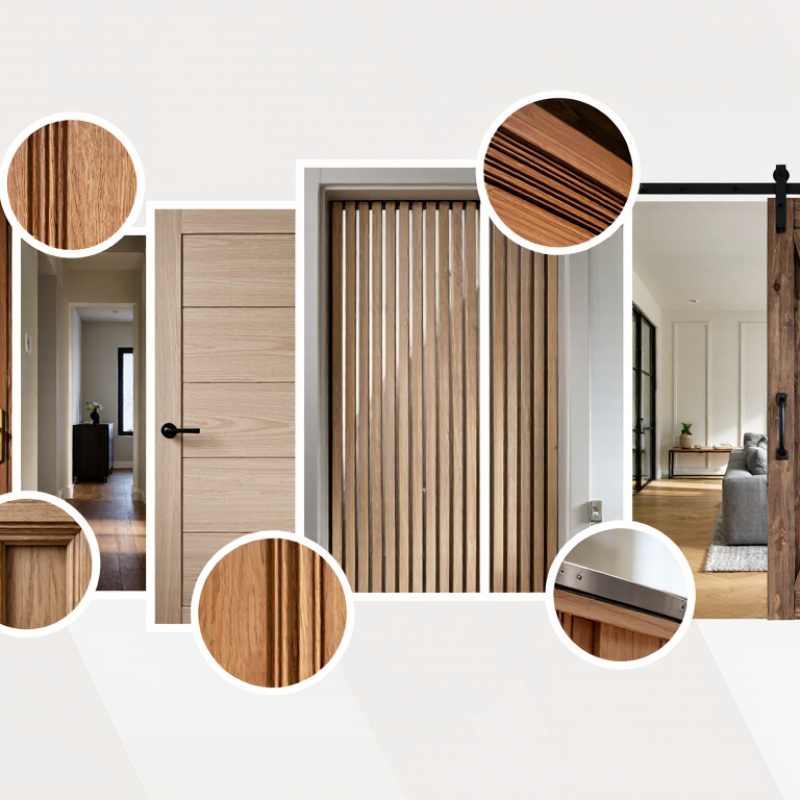
What Are the Top Wood Door Designs for Homes?

What Defines a Wood Door Design for the Home?

A wood door design is defined by its proportions, construction, grain, finish, and hardware—not by the wood species alone. A broad stile can make an entry feel grounded, while narrow panels create a lighter, more traditional rhythm. Grain direction matters, too. Vertical grain can draw the eye upward; visible knots add a more rustic, less uniform character. Small details count.

Wood moves. That matters. The USDA Forest Products Laboratory’s Wood Handbook (FPL-GTR-282, 2021) places wood’s fiber-saturation point at about 30% moisture content; below it, changing moisture can cause wood to shrink or swell. That is why sound door design considers joinery, panel movement, and finish alongside appearance. For an exterior door, a well-sealed surface and weather-resistant detailing help manage exposure, while glazing changes both the look and the light entering a hall. Interior doors can prioritize privacy, sound separation, or visual flow. A glossy finish may look crisp in a showroom, yet reveal fingerprints at home. Choose details for the room’s real use, not just the photograph.

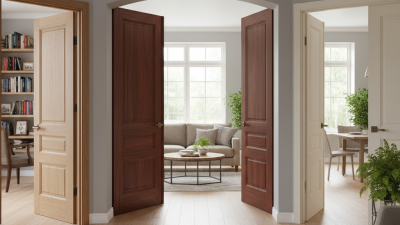
Which Classic Panel Door Styles Remain Popular?

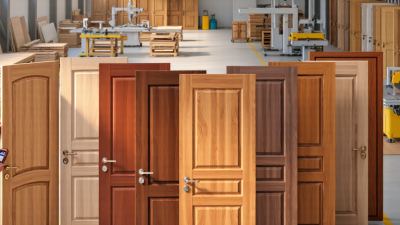
Classic panel doors remain popular because their proportions suit both traditional rooms and simpler modern interiors. Two-panel doors feel calm and open, while four- and six-panel layouts add more rhythm to a hallway. Raised panels bring deeper shadow lines; flat Shaker panels look cleaner beside plain trim. Oak shows strong grain, while painted poplar keeps attention on the door’s shape. Small details matter: a narrow stile can look out of place beside broad, substantial casing.

A practical reason to choose a familiar design is its flexibility. The 2024 U.S. Houzz & Home Study reported that 54% of homeowners renovated in 2023, reflecting sustained investment in home updates. The report does not rank door styles, so it cannot prove one panel layout is most popular. Still, classic profiles are easier to coordinate when wall colors, hardware, or furnishings change. They are not automatically right for every room. A dark six-panel door may feel heavy in a small, dim corridor.

Tips: Match panel depth to the room’s trim, and view a full-size sample in daylight. Check door swing and handle clearance before ordering. A small mismatch can be noticeable.

What Are the Top Wood Door Designs for Homes?

Classic panel doors remain versatile choices, from clean, simple layouts to more traditional designs.

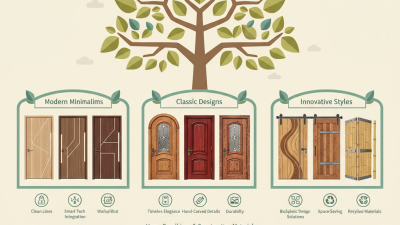
The chart compares panel counts in common door layouts: Shaker-style doors often use one broad flat panel, while traditional designs commonly feature two, four, or six panels. These are representative configurations, not a popularity ranking; available styles vary by door maker.

How Do Craftsman, Dutch, and Barn Doors Differ?

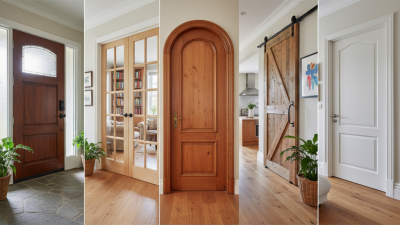
Craftsman doors emphasize structure: sturdy rails, recessed panels, and sometimes small panes of clear or textured glass. Their substantial trim suits bungalows and older homes, but the details can feel heavy in a narrow entry. A Dutch door splits horizontally, letting the upper half open while the lower half stays shut. It brings light and airflow into kitchens or mudrooms. The trade-off is practical: its central latch and meeting rail need careful alignment to limit drafts. Barn doors slide along an exposed track, saving swing space in tight rooms. They look relaxed and tactile, yet gaps around the slab offer less privacy and sound control than a hinged door. Charming, but not ideal everywhere.

Material behavior matters as much as style. The USDA Forest Products Laboratory’s Wood Handbook reports that tangential shrinkage in many woods is roughly 1.5 to 2 times radial shrinkage. That movement can affect panel fit, so stable joinery and a suitable finish matter, especially on exterior doors.

For a broader investment benchmark, Zonda’s 2024 Cost vs. Value report estimated 188.1% cost recoup for steel entry-door replacement; it does not compare wood styles, so treat that figure as context, not a promise. Check the door’s exposure, clearance, and hardware before choosing. A beautiful barn door can still be the wrong answer.

What Makes Modern Flush and Glass-Paneled Doors Distinct?

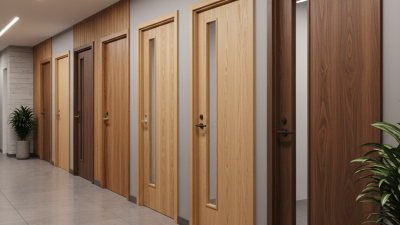
Modern flush doors have smooth, flat faces and minimal trim. Their simple lines suit contemporary rooms and can make a narrow hallway feel less busy. Wood veneer adds visible grain, while painted finishes keep the surface visually quiet. Glass-paneled doors work differently. They share light between rooms and let you see movement beyond the doorway. Clear glass feels open; frosted or textured glass softens views while preserving some daylight. Small panes can also echo window grids.

The choice affects daily comfort, not just appearance. A flush door may offer more privacy, especially around bedrooms, but its solid look can feel plain beside detailed woodwork. Glass panels brighten dim interiors, yet fingerprints and glare show more readily. Consider the room’s use, nearby windows, and the door’s construction. A well-fitted frame matters too: gaps can weaken sound control, even with a substantial door. The trade-off is real.

Tips: Check samples in morning and evening light. Hold them near your existing trim. For shared spaces, try textured glass before choosing clear panels. And measure carefully; I still think door proportions are easy to underestimate.

How Can Wood Species and Finishes Shape a Door’s Style?

Wood species set a door’s first impression before its panels or hardware do. Oak has visible grain and a steady, grounded look; its texture suits both traditional homes and simpler, modern rooms. Walnut brings darker tones and flowing patterns, making a plain slab feel more distinctive. Maple is usually subtler, with a fine grain that keeps attention on the door’s shape. These are tendencies, not rules. Grain varies from board to board.

Finish changes how those qualities read in a room. A clear, low-sheen finish lets the wood’s natural variation show without adding much glare. A warm stain can deepen oak’s grain, while a pale finish may soften its contrast. Painted finishes hide most grain, but they make panel profiles and color the focus. Test samples near the entry, where daylight and indoor lighting can shift their appearance. Look at them beside the floor, too. Small details matter.

A glossy finish can look crisp, though fingerprints and reflected light may become more noticeable. Matte finishes feel quieter, but they can make some woods appear flatter than expected. There is no perfect sample board. Check how the grain, color, and sheen work together before choosing; a finish that looks beautiful in a workshop may feel too dark in a shaded hallway.

What Are the Top Wood Door Designs for Homes? How Can Wood Species and Finishes Shape a Door’s Style?
Door Design Common Wood Species Typical Finish Style and Visual Effect Practical Notes
Traditional six-panel Oak, maple, pine Clear varnish, warm stain, or paint Raised panels and balanced proportions create a classic, formal appearance. Oak’s prominent grain adds texture, while maple offers a smoother look. A versatile choice for bedrooms, hallways, and traditional interiors. Painted versions can suit a range of color schemes.
Shaker-style flat panel Maple, oak, cherry, paint-grade poplar Natural oil, clear coat, stain, or paint Simple recessed panels and clean lines suit both contemporary and transitional rooms. Fine-grained maple gives a restrained appearance; oak makes the grain more noticeable. Its uncomplicated profile pairs readily with varied trim and hardware. A smooth painted finish can emphasize the crisp geometry.
Flush modern door Walnut, maple, birch, veneer-faced wood Clear matte or satin finish; dark stain A flat, uninterrupted face gives rooms a minimal, modern look. Walnut tends to read as rich and dark, while maple and birch are generally lighter. Best suited to interiors where clean lines are desired. A clear finish helps show natural grain; veneer construction can provide a consistent appearance.
Arched-top panel door Mahogany, oak, cherry Transparent stain or clear finish A curved top and shaped panels create a decorative, traditional focal point. Darker woods and stains can make the design feel especially formal. Consider the surrounding architecture and trim so the curved profile feels integrated rather than isolated.
Rustic plank or ledged door Pine, fir, oak Brushed, stained, oiled, or painted finish Visible knots, boards, and grain give the door a relaxed, farmhouse or rustic character. Pine and fir often show pronounced natural features. Natural variations are part of the look. Confirm that the door is properly constructed for its intended interior or exterior use.
Glazed wood door Oak, mahogany, pine, maple Clear coat, stain, or painted frame Glass panels bring light through the opening while the wood frame adds warmth. Clear glass feels open; textured or frosted glass offers more visual privacy. Choose glazing appropriate to the location and privacy needs. Exterior doors require suitable weather protection and safety-rated glass where applicable.
Carved or decorative panel door Mahogany, walnut, cherry, oak Clear finish or carefully applied stain Relief carving and detailed molding highlight craftsmanship and create a more ornate, formal style. A clear finish preserves visibility of the wood’s grain. Detailed surfaces may need more careful dusting and refinishing than a plain flush door.