China Top 10 Solid Wood Door Manufacturers

Choosing a solid wood door manufacturer in China takes more than comparing catalogue photos. Buyers need to assess timber species, moisture control, joinery, finishing, customization, and quality checks. A door may look flawless in a showroom, yet behave differently after months of heating, humidity, and daily use. Details matter.

Industry data offers useful context, but it does not rank door makers. FAO’s Global Forest Products Facts and Figures 2022 reports global sawnwood production of about 446 million cubic metres that year. This figure describes a broad material supply, not solid wood door output. It nevertheless highlights why timber sourcing and processing deserve close attention. Manufacturers can differ substantially in drying methods, construction, and production capacity.

This guide introduces ten Chinese manufacturers for buyers comparing product ranges and manufacturing capabilities. It considers practical signals such as documented specifications, export experience, finish options, and communication about tolerances. These indicators support an initial review; they cannot replace factory verification or sample inspection. No ranking is perfect. Company details and product lines may change, so confirm current claims directly with each supplier. Examine the grain, edges, and finish in person when possible. Ask how the manufacturer controls moisture and checks dimensions before shipment. That extra step can prevent costly surprises. A polished website is only a starting point.
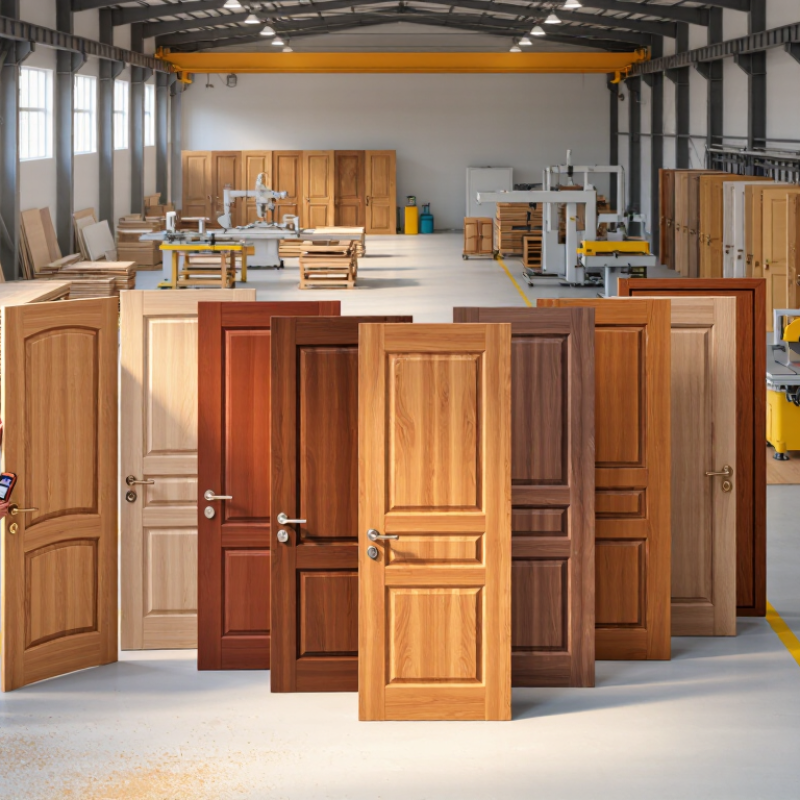
China Top 10 Solid Wood Door Manufacturers

Solid Wood Doors: Definition, Materials, and Key Features

Solid wood doors are built from lumber or joined wood sections, not merely a thin wood veneer over a hollow core. Common choices include oak, maple, walnut, and pine. Each has a distinct grain, color, and hardness. A close look at the edges can help: a genuine solid-wood panel usually shows wood grain through its thickness, though construction methods vary. Solid does not always mean one uninterrupted piece.

Wood responds to indoor humidity. It absorbs and releases moisture, which can cause seasonal swelling or shrinkage. The USDA Forest Products Laboratory’s Wood Handbook describes this relationship and explains why moisture content matters in wood products. The FAO’s Global Forest Resources Assessment 2020 reports that forests cover about 4.06 billion hectares worldwide; that figure provides context for responsible sourcing, but it does not certify any particular door. Performance also depends on joinery, finish, and installation. A heavy door can feel reassuring, yet weight alone is not proof of quality.

Tips: Ask for the wood species, core construction, and moisture-control details. Check that the door swings freely and that its finish is even. Measure the opening carefully. A small gap can become annoying. Don’t rely on appearance alone.
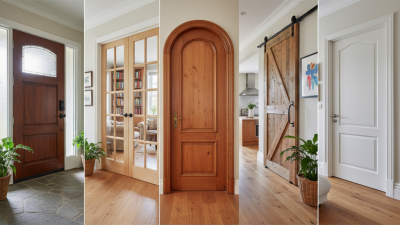
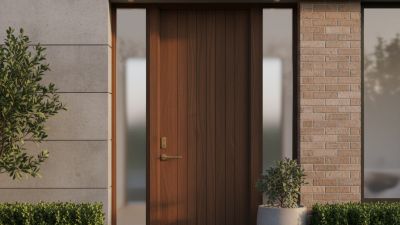
China’s Solid Wood Door Industry and Manufacturing Landscape

China Top 10 Solid Wood Door Manufacturers

China’s solid wood door industry combines traditional joinery with automated production. Manufacturers serve residential projects, hotels, villas, and overseas distributors. Many factories operate in established furniture regions across Zhejiang, Guangdong, Sichuan, and Jiangsu. Their capabilities differ widely, even when product photos appear similar.

Reliable manufacturers usually control timber moisture before machining. Kiln-dried wood often receives moisture testing during incoming inspection and before assembly. CNC cutting improves repeatability, while skilled workers still adjust joints by hand. A well-made door should show tight corners, stable panels, smooth sanding, and consistent finishing. Factory audits should examine dust control, coating ventilation, storage conditions, and production records. These details reveal more than a polished showroom.

Material sourcing also deserves careful attention. Suppliers should provide species information, grading details, and legal timber documentation. Clear tolerances, packaging tests, and after-sales procedures reduce project risks. Some manufacturers offer attractive prices but provide weak technical drawings or vague warranty terms. That is where problems begin. I have seen beautiful samples fail because the door expanded after installation. Climate, wall conditions, and installation quality matter as much as factory craftsmanship. A top-ten list should therefore compare engineering depth, quality consistency, customization ability, and verified delivery performance, not only export volume or online visibility.

China Top 10 Solid Wood Door Manufacturers – China’s Solid Wood Door Industry and Manufacturing Landscape

Industry overview, not a ranked list of named manufacturers. Product specifications and capabilities vary by factory and order.

No. Industry Area Typical Manufacturing Practice Practical Buyer Check
1 Solid-wood doors Made primarily from natural solid timber; species, component construction, and finish differ by product. Request the wood-species declaration and a written description of the door’s internal construction.
2 Solid-wood composite doors May combine a timber frame or core with wood-based panels or veneer; construction should not be assumed to be solid timber throughout. Confirm which components are solid wood, engineered wood, or veneer.
3 Timber selection Manufacturers select timber by species, grade, appearance, and intended application; availability depends on sourcing and order requirements. Check species, grade, permitted knots or color variation, and sourcing documentation.
4 Timber drying and conditioning Controlled drying helps manage timber moisture before machining and assembly; suitable moisture levels depend on the wood and destination conditions. Ask how moisture is measured and request the agreed acceptance range for the shipment.
5 Component machining Sawing, planing, routing, and CNC operations can produce door stiles, rails, panels, and hardware recesses. Approve shop drawings, dimensions, hinge positions, lock preparation, and tolerances before production.
6 Joinery and assembly Door components are joined and assembled using methods selected for the design and construction; assembly quality affects fit and durability. Review a construction sample and specify inspection criteria for joints, alignment, and flatness.
7 Surface finishing Finishes may include clear or colored coatings; appearance and maintenance depend on the coating system and preparation. Approve a finished sample and confirm sheen, color, coating system, and repair procedure.
8 Customization Factories may produce made-to-order sizes, panel layouts, profiles, and hardware preparations, subject to their equipment and order terms. Confirm finished opening dimensions, handing, frame details, hardware, and whether the quote includes installation components.
9 Quality control Inspection can cover dimensions, appearance, operation, finish, and packaging; inspection scope should be agreed for each order. Use a written inspection checklist and define sampling, defect limits, and corrective-action terms.
10 Export and compliance Export documentation and applicable product or environmental requirements depend on the destination market and project specification. Verify certificates and test reports directly, and confirm that they apply to the ordered product and destination.

How to Evaluate the Top 10 Chinese Solid Wood Door Manufacturers

China’s top ten solid wood door manufacturers should be ranked by evidence, not showroom polish. I inspect kiln-drying records, glue specifications, and finished-door tolerances. The FAO Global Forest Resources Assessment 2020 recorded about 220 million hectares of forest in China. That figure does not prove responsible sourcing. Ask for wood species, harvest regions, chain-of-custody documents, and replacement procedures.

Moisture control deserves special attention. A factory should show readings for door leaves, frames, and storage areas. I prefer measured data over a vague “fully dried” claim. Independent tests should cover formaldehyde emissions, adhesion, dimensional stability, and fire performance where applicable. China’s GB/T 18580 standard provides a useful reference for formaldehyde testing. Check each certificate’s date, sample number, and testing scope. Small details matter.

Capacity also needs verification. World Bank data placed China’s urban population at about 66% in 2023, supporting strong renovation demand. Yet a large market does not guarantee reliable delivery. Compare monthly output, export records, packaging photographs, and warranty response times. I would request a finished sample before signing a bulk order. A polished sample can still hide weak joints. My own evaluation may miss seasonal warping, so factory visits should include both production and storage areas. Reliable rankings need evidence, not confidence alone.

How to Evaluate China’s Solid Wood Door Manufacturers

Suggested evaluation weights for comparing manufacturers. These are a practical assessment framework, not measured market data or company rankings.

Compare manufacturers using documented evidence, such as material specifications, moisture-control procedures, test reports, quality-control records, warranty terms, and export references. Apply the same criteria and weighting to every candidate.

Profiles of 10 Leading Solid Wood Door Manufacturers in China

The ten manufacturers profiled represent China’s varied solid wood door industry. Their workshops range from compact production lines to highly automated facilities. Several specialize in oak, walnut, ash, or engineered solid wood panels. Others focus on custom doors for villas, hotels, and apartments. Their differences appear in timber sourcing, drying methods, joinery, and finishing quality.

A reliable profile looks beyond showroom photographs. It examines kiln-drying records, moisture control, and panel stability across changing climates. Strong manufacturers use mortise-and-tenon joints, calibrated cutting, and controlled sanding. Some apply low-emission coatings in multiple thin layers. This helps protect the grain without hiding it. Installation experience also matters. Heavy doors need accurate hinges, reinforced frames, and careful site measurements. Small errors can cause rubbing or uneven gaps.

The profiles also reveal areas needing closer review. Not every factory publishes complete moisture data or long-term performance testing. That is a weakness. Buyers should request sample sections, coating specifications, warranty terms, and inspection reports. Production capacity alone does not prove craftsmanship. A useful comparison considers consistency, communication, packaging, and after-sales support. It also checks whether the manufacturer can adapt dimensions without weakening the structure. Some suppliers appear impressive but provide limited technical evidence. That should invite questions, not immediate trust.

Product Range, Quality Standards, and Market Position Comparison

China’s top 10 solid wood door manufacturers usually cover interior doors, exterior doors, fire-rated doors, and custom architectural projects. Their product ranges differ in wood species, panel construction, finishes, and hardware options. Oak, ash, walnut, and rubberwood remain common choices, while engineered cores help control movement and reduce costs.

Quality comparison should begin with moisture control. Reliable factories typically test timber moisture before assembly and maintain stable kiln-drying procedures. Consistent dimensions, tight joints, smooth sanding, and durable coatings also matter. Buyers should request inspection records, sample doors, and test reports for relevant standards. Certification claims need verification. A polished catalogue proves little.

Market position varies by production scale and service depth. Large manufacturers often offer stronger export systems, standardized packaging, and wider capacity. Mid-sized producers may respond better to unusual sizes, carved panels, or matching wall systems. Smaller workshops can provide detailed craftsmanship, but delivery consistency may be weaker. Price alone gives a poor comparison.

A practical assessment should compare warranty terms, replacement procedures, lead times, and communication quality. Inspectors should check veneer alignment, corner joints, hinge preparation, and packaging protection. Even experienced buyers can overlook seasonal wood movement. That risk deserves attention. Manufacturers with transparent sampling, traceable materials, and clear acceptance criteria generally appear more dependable than suppliers relying on broad marketing language.