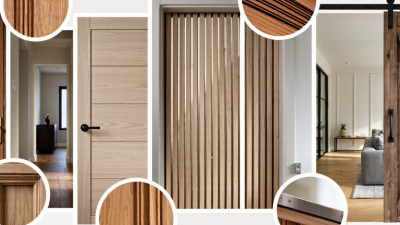
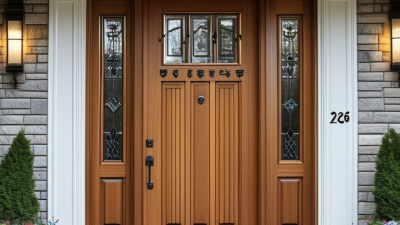
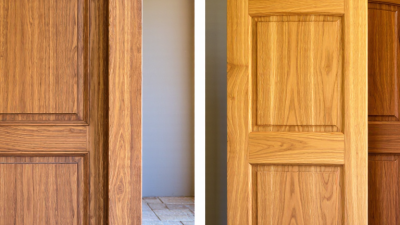
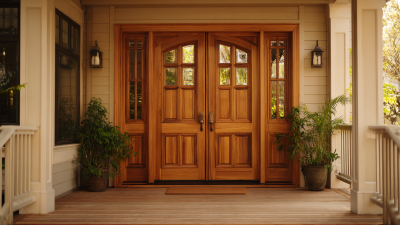
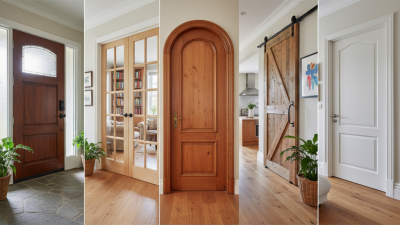
A wood front door shapes a home’s first impression, but its job goes far beyond appearance. It faces rain, sunlight, temperature swings, and daily use. The right choice depends on your climate, entryway, maintenance habits, and budget—not just the grain shown in a showroom. Looks matter. So does performance.
Architect Frank Lloyd Wright wrote, “The space within becomes the reality of the building.” Though he was not a door-maker, his attention to how materials shape a home offers a useful lens for choosing an entrance. A wood front door should feel connected to the house, not pasted onto it. Look closely at the panel construction, joinery, finish, and threshold. A beautiful slab can still disappoint if water reaches exposed end grain or the finish is neglected.
This guide explains how to compare wood species, construction methods, glazing, hardware, and protective finishes in 2026. It also considers energy performance and upkeep, which vary with the door design, installation, and local conditions. Ask how often the finish needs attention, and inspect a sample in daylight before ordering. Small details matter. One honest caveat: even a well-built door needs care, and no finish stays fresh forever. The best wood front door is one that suits your home and the time you can realistically give it.
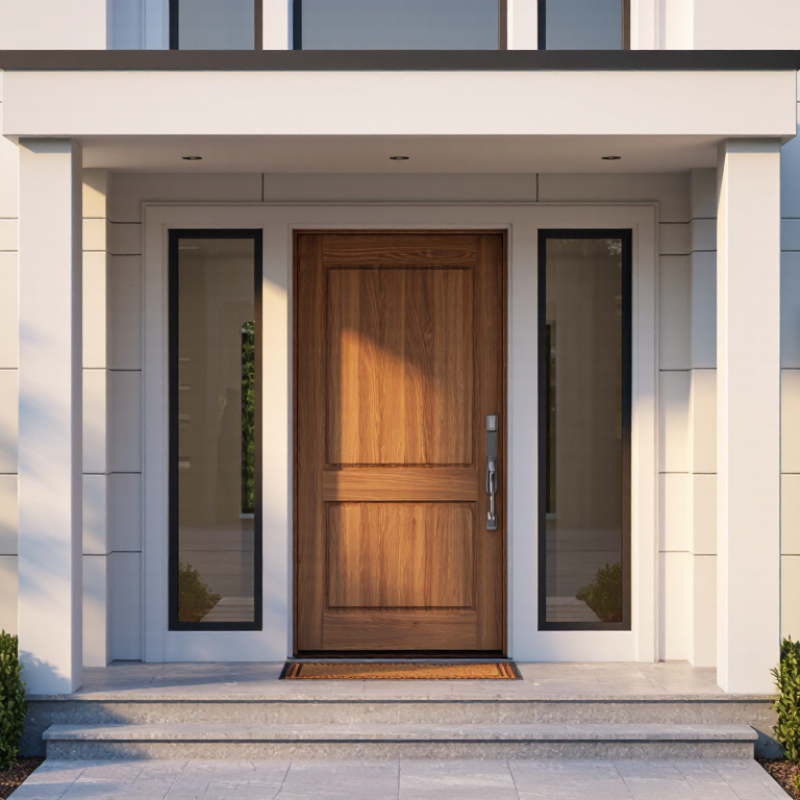
A wood front door is more than a choice of species. Compare the slab’s construction, finish, and fit in the frame. Solid wood offers natural grain, but it can swell or shrink as humidity changes. Engineered cores may be more dimensionally stable. Ask how the door is built, and check that its finish covers exposed edges. Those edges take weather first.
Seals matter. The U.S. Department of Energy’s Energy Saver guidance estimates that air leaks account for 25–40% of heating and cooling energy use in a typical home. That figure applies to the whole home, not one door, but it shows why weatherstripping and a tight threshold deserve attention. Check the NFRC label for the door’s U-factor; a lower value indicates less heat transfer. If the door includes glass, review its solar heat gain coefficient too. Feel the difference.
Inspect the bottom sweep, hinges, and jamb when the door is closed. Look for daylight around the edges. A heavier slab may feel reassuring, but weight alone does not establish durability or security. Wood needs maintenance, and the right schedule depends on sun, rain, and the finish. I would not choose by appearance alone; a beautiful door can still draft if its installation is poor.
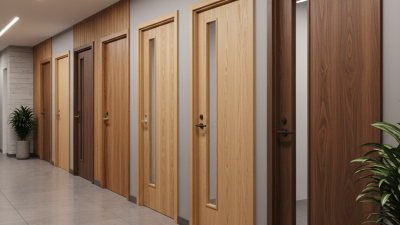
Choosing a wood front door starts with the weather it must face. White oak is dense and strong, with a pronounced grain that suits a substantial entrance. Its natural resistance to moisture is useful, but no oak door is weatherproof. Red oak is more porous, so prolonged damp exposure demands careful sealing. Climate matters.
Douglas fir offers a lighter, straighter grain and good strength for its weight. It can show dents more readily than harder species, and exposed surfaces need consistent protection. Mahogany is often selected for its warm color and relative dimensional stability, though the name covers several species with different properties. Check the exact species and its sourcing rather than relying on a broad label. Cedar is lighter and naturally durable, but its softer surface may mark more easily.
Local conditions can change the choice. Strong afternoon sun may fade or crack a neglected finish, while repeated wetting can stress joints and lower door edges. A deep porch helps, but it cannot replace sound construction and regular inspection. Details matter. Look closely at joinery, panel design, and the finish on every edge. Solid wood also expands and contracts as humidity shifts; that movement is normal, yet it can surprise buyers expecting a perfectly unchanged surface. I would not choose by grain alone: climate, exposure, and willingness to maintain the finish matter just as much.
| Wood Species | Janka Hardness (lbf) |
Appearance | Natural Durability | Climate Considerations | Best Fit for a Front Door | Key Trade-Off |
|---|---|---|---|---|---|---|
| Western Red Cedar | 350 | Warm reddish-brown to pale pinkish-brown; straight grain and often visible knots. | Heartwood is naturally resistant to decay; softwood is relatively easy to dent. | A practical choice for damp conditions when the door is properly sealed. Protect exposed end grain and maintain the finish. | Rustic, lightweight doors and sheltered entries where a softer surface is acceptable. | Lower dent resistance than the other species listed. |
| Douglas Fir | 660 | Light tan to reddish-brown, usually with a straight, prominent grain. | Moderate resistance; untreated wood is vulnerable to decay in persistently wet conditions. | Works in varied climates with sound weather protection, a durable finish, and regular inspection. | Traditional painted or clear-finished doors with a pronounced grain pattern. | Requires careful moisture protection, especially at the bottom edge and joints. |
| African Mahogany (Khaya spp.) | 830 | Pinkish-brown to reddish-brown, often with an interlocked grain and ribbon-like figure. | Generally moderate natural durability; performance varies by species and the heartwood used. | Suitable for many settings when protected with a suitable exterior finish. In exposed or humid locations, maintain the finish consistently. | A warm, refined appearance and a balance of workability and dent resistance. | Color and durability can vary; specify the botanical species and door construction. |
| Teak | 1,000 | Golden-brown to medium-brown, often with a straight or slightly wavy grain. | Heartwood has strong natural resistance to decay and many insect attacks. | Performs well in humid or wet environments, but exposed finishes still weather and need maintenance if color retention is desired. | High-exposure entrances where natural durability is a priority. | Typically more costly; uncoated teak can weather to a silvery gray. |
| White Oak | 1,360 | Light tan to medium brown, with a prominent grain and distinctive ray fleck in quarter-sawn boards. | Heartwood is durable; its structure makes it less permeable to liquid water than many common woods. | A strong option for damp climates when the door is well sealed. No wood door is waterproof, and standing water should be avoided. | Hard-wearing doors with a bold, classic grain. | Heavier than many alternatives; higher hardness does not by itself guarantee a stronger door. |
| Sapele | 1,410 | Reddish-brown with interlocked grain; quartersawn boards may show a ribbon-like figure. | Moderately durable; exterior performance depends on the heartwood, construction, and finish. | Can suit a range of climates with proper sealing and maintenance, particularly on sun- and rain-exposed faces. | A distinctive, richly figured door with high resistance to surface denting. | Interlocked grain can make machining more challenging; figure and color vary between boards. |
How to interpret the figures: Janka hardness is a test of resistance to indentation, not a direct measure of a finished door’s structural strength, security, or weather resistance. Values are commonly reported species averages and can vary with the test sample. For any species, door construction, joinery, glazing, weatherstripping, installation, and finish maintenance also affect performance.
A wood front door should feel solid, but weight alone does not prove good construction. Look for stable, well-joined components and a finish that protects exposed edges. Check the bottom rail and corners closely; these areas often show moisture damage first. A well-made door can still swell or stick if its finish is neglected. That part is easy to underestimate.
Tips: Ask what insulation is inside the door and whether the frame includes weatherstripping. At the showroom, inspect the threshold and test the lock. Small gaps matter. A tight fit limits drafts, while a reinforced strike area helps the deadbolt resist force.
Security depends on the whole entry, not just the slab. A strong door needs a sound frame, secure hinges, and a properly installed lock. If the frame is loose, even a heavy door may offer little advantage. Consider glass placement, too: narrow or protected glazing can preserve daylight without putting it directly beside the lock. Climate also matters. Wood needs periodic care, and local exposure to rain or strong sun can change how often the finish needs attention. There is no perfect door for every home; installation and upkeep can matter as much as the material.
Typical residential door slab thickness provides a useful starting point when evaluating construction.
In U.S. homes, 1⅜ inches is a common thickness for interior door slabs, while 1¾ inches is common for exterior entry doors. A thicker slab alone does not guarantee better insulation or security: compare the door’s core and joinery, check its weatherstripping and threshold, and pair it with a properly installed deadbolt and reinforced strike area. Verify the product specifications and local requirements before buying.
A wood front door should feel connected to the house, not like a separate design statement. Notice the roofline, window shapes, and trim before choosing a style. A simple, flat-panel door often suits a modern facade, while raised panels can echo traditional proportions. Glass inserts bring daylight into a dim entry, but check what they reveal from the sidewalk. More glass is not always better.
Start with the setting. A covered porch protects finishes from direct rain and sun; an exposed entrance may need more frequent care. Clear finishes show grain beautifully, but fading and weathering can make upkeep demanding. Paint hides some variation and offers a more controlled color. Test samples outside, morning and afternoon. I once thought a deep stain would warm a shaded porch; it made the entry feel heavier instead. That choice deserved another look.
Hardware should match both the door and daily use. A long, straight handle may suit a contemporary door, while a rounded knob feels at home on a more classic design. Choose a finish that relates to nearby lights or house numbers, rather than matching every metal exactly. Small details matter. Check that the handle feels comfortable with wet hands, and that the lockset works smoothly with the door’s weight. Ask an experienced installer about hinges, weather seals, and local exposure before ordering; a beautiful door can still stick as wood responds to moisture.
Checking Measurements, Installation Needs, and Maintenance Requirements
Before comparing styles, measure the doorway carefully. Check the opening’s width and height in several places; older homes often have uneven frames. Record jamb depth, threshold height, and which way the door should swing. Small errors matter. A door’s listed size may not match the rough opening needed for installation, so confirm both with the supplier or installer. It is tempting to measure only once. Don’t.
Installation depends on the condition of the frame, not just the new door. Look for soft wood, gaps, or signs of water around the jamb. If the frame is out of square, fitting a replacement may require adjustments and extra time. Wood moves. Seasonal humidity can make a door swell or shrink, affecting its fit. A qualified installer can assess the opening and explain whether repairs are needed before the door goes in.
Tips: Ask who will seal the top and bottom edges, not just the visible faces. Plan to inspect the finish each year, especially near the threshold. Touch-ups are easy to postpone, and I’d be honest: I have seen small chips become larger maintenance jobs. Keep the door’s care instructions somewhere you can find them.