What Is the Best Type of Solid Wood Doors?
Choosing the best type of solid wood doors depends on more than appearance. Wood species, construction, climate, and daily use all affect performance. A heavy oak door may suit a busy entryway, while walnut offers richer color and a smoother visual character. Pine can reduce costs, but it may dent more easily. Every choice involves trade-offs.
The door’s construction deserves close attention. Look for kiln-dried timber, stable moisture content, strong mortise-and-tenon joints, and carefully sealed edges. These details help limit swelling, shrinking, and warping when indoor humidity changes. A well-built door should feel balanced, close without force, and show consistent grain across its panels. Small details matter.
In practical projects, mahogany, oak, teak, and walnut often receive strong consideration. However, no species performs perfectly everywhere. Teak handles moisture well, yet its price and sourcing require careful review. Oak is durable and widely available, but its open grain needs proper finishing. Walnut looks refined, though it can cost more than expected.
Reliable guidance should include verified supplier information, finish specifications, warranty terms, and maintenance requirements. Independent testing can strengthen confidence, especially for exterior doors. Still, product claims deserve a careful reading. “Solid wood” may describe the main frame, not every component.
This guide examines durability, stability, design, cost, and maintenance. It also questions common assumptions. The most attractive door is not always the most practical. A thoughtful decision matches the wood to the building, climate, budget, and the people using it every day.
What Defines a High-Quality Solid Wood Door?
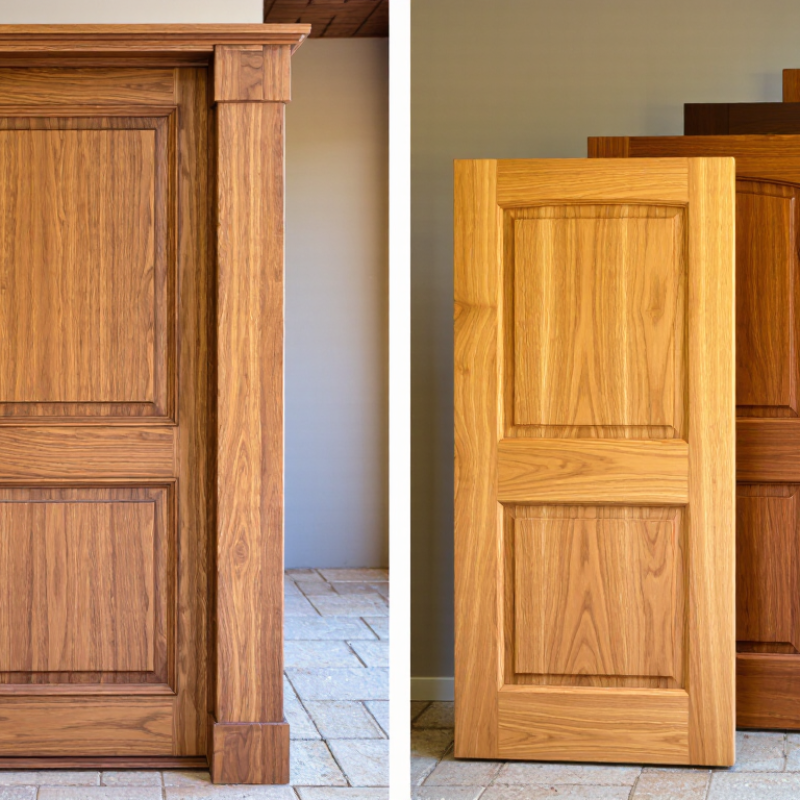
A high-quality solid wood door begins with controlled moisture, not an impressive species name. The 2021 USDA Forest Products Laboratory Wood Handbook reports that interior wood commonly stabilizes near 6–8% moisture content in heated buildings. A responsible manufacturer should dry and acclimate the lumber near that range. This reduces twisting, open joints, and seasonal panel movement. A moisture meter can reveal more than appearance. Feel the door edges, too. They should feel dry, dense, and consistently finished.
Construction matters just as much. Tight mortise-and-tenon or engineered joinery helps the stiles and rails resist separation. Carefully fitted panels should move slightly instead of being glued rigidly into their frames. That detail is easy to miss. According to the 2021 ASHRAE Handbook—Fundamentals, wood conductivity commonly falls around 0.12–0.18 W/m·K, depending on species and moisture. A thicker door can therefore improve thermal resistance, but poor weather-stripping may waste that advantage. Check the bottom seal, hinge alignment, and latch engagement. A premium door should close without force and remain quiet when shut.
Finish quality deserves a practical inspection. Coating all faces and edges helps slow uneven moisture exchange, especially around the lower edge. Still, no finish prevents movement forever. Wood is a living material. Even an excellent door may need adjustment after a wet season, and that is not automatically a manufacturing failure.
How Do Door Construction Methods Affect Performance?
The best solid wood door depends on how its parts are assembled. Construction affects stability, insulation, sound control, and service life. A wide, one-piece slab looks impressive, but it can expand and contract noticeably with humidity. Seasonal movement may cause sticking, cracks, or small gaps.
Frame-and-panel doors usually perform better because their panels can move inside the rails and stiles. Mortise-and-tenon joints add strength, especially around hinges and handles. A well-built door also uses properly dried timber, balanced thickness, and finish on every surface. In practical installations, unfinished top and bottom edges often create trouble first. I have found that careful fitting matters as much as attractive timber. Still, even excellent workmanship cannot fully prevent movement in a damp hallway. That limitation deserves attention.
Tips: Check the wood’s moisture content before installation. Seal all six sides, including the hinge and latch edges. Leave suitable clearance around the frame. Use three strong hinges for a heavy door. Avoid forcing a swollen door shut. Inspect it after one wet season, because early adjustment may prevent larger repairs. Construction is not always visible, but its effects are.
Which Solid Wood Door Style Fits Each Application?
The best solid wood door depends on where it works, not only how it looks. For main entrances, a stile-and-rail door with raised panels suits traditional homes. Its deep profiles create shadow lines around the entry. A wide, engineered solid-wood core can also reduce movement better than a single wide timber slab. The U.S. Department of Energy reports that heat gain and loss through windows and doors can represent 25% to 30% of residential heating and cooling energy. Therefore, pair the door with tight weatherstripping, an adjustable threshold, and properly sealed glass.
For bedrooms, offices, and studies, a solid flush door offers a quieter, calmer surface. The design has fewer grooves to collect dust. The Door and Hardware Institute emphasizes that door performance depends on the complete assembly, including frames, seals, and hardware. A beautiful slab cannot correct a poorly fitted frame. For living rooms, dining areas, or garden-facing openings, French doors or divided-light doors bring daylight and visual connection. Use laminated or safety-rated glazing where impact risk exists. Check local requirements before selecting glass.
Bathrooms and utility rooms need stable construction and careful finishing, especially near steam and temperature changes. A painted or sealed solid wood door may perform well, but exposed end grain remains vulnerable. Barn-style doors save swing space, yet their side gaps limit privacy and sound control. That trade-off is often underestimated. The Woodwork Institute’s quality guidance also highlights consistent moisture control during fabrication and installation. In practice, even an excellent door can warp after careless storage. Style matters, but climate, opening size, privacy, and maintenance should decide the final choice.
How Should You Compare Durability, Maintenance, and Cost?
What Is the Best Type of Solid Wood Doors?
How Should You Compare Durability, Maintenance, and Cost?
The best solid wood door depends on your climate, traffic, and maintenance habits. In practical installations, dense hardwood usually resists dents better than softer wood. However, hardness alone does not guarantee long service. Stable construction, tight joints, and properly sealed edges matter just as much. A beautiful door can still warp if moisture reaches its end grain.
Check how the door handles daily use. Does it close evenly after seasonal changes? Are the hinges strong enough for its weight? Doors exposed to rain or direct sunlight need exterior-grade finishes and regular inspections. Look for peeling coating, small cracks, or swelling near the threshold. Repairing these signs early costs less than replacing the slab. Still, maintenance is often underestimated.
Keep it simple.
Cost comparison should include more than the purchase price. Add installation, hardware, finishing, delivery, and future refinishing. A cheaper door may require more sanding or adjustment over time. A higher-priced door may offer better stability, but it is not automatically the wiser choice. Ask for moisture information, construction details, care instructions, and written warranty terms. Local building requirements may also affect the suitable design. My own comparison method has changed: I once focused too heavily on wood species and overlooked installation quality. That mistake was expensive.