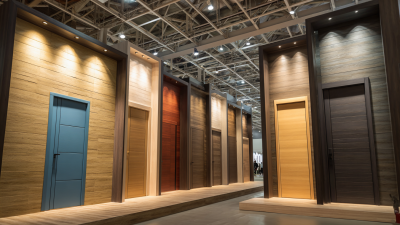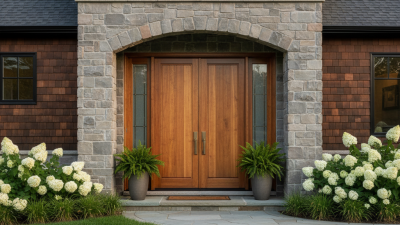
Choosing a wood door design for an international project involves more than appearance. Buyers must consider climate, building use, security, maintenance, and local installation skills. A carved oak door may suit a dry European entrance, yet swell in a humid coastal city. A slim walnut pivot door can look impressive, but its hinges need accurate engineering and strong structural support.
George Nakashima, a respected woodworker and furniture designer, said, “The tree is a living thing, and wood is a living material.” This idea remains important for global door buyers. Timber has grain, movement, moisture content, and regional character. It cannot be treated like plastic or steel. The best wood door design respects these natural limits while using reliable construction methods.
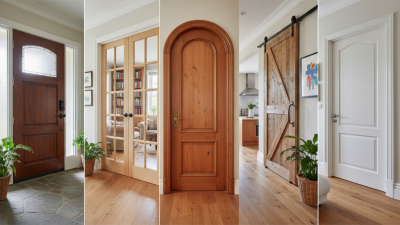
This guide presents ten wood door design directions for international buyers. The selection includes minimalist flush doors, traditional panel doors, warm oak entrances, dramatic pivot systems, glass-and-timber combinations, and carved statement doors. Each style offers a different balance of privacy, light, durability, and visual impact. Details matter here. Look for properly sealed end grain, stable core construction, corrosion-resistant hardware, and clear finishing instructions.
Still, no ranking is perfect. A beautiful design may fail when its finish does not match the local weather. A costly door may also disappoint if measurements are rushed. Buyers should request samples, technical drawings, warranty terms, and installation guidance before ordering. Wood species names can be confusing across markets, too. Verify the botanical name and certification. Practical judgment must guide the final choice.
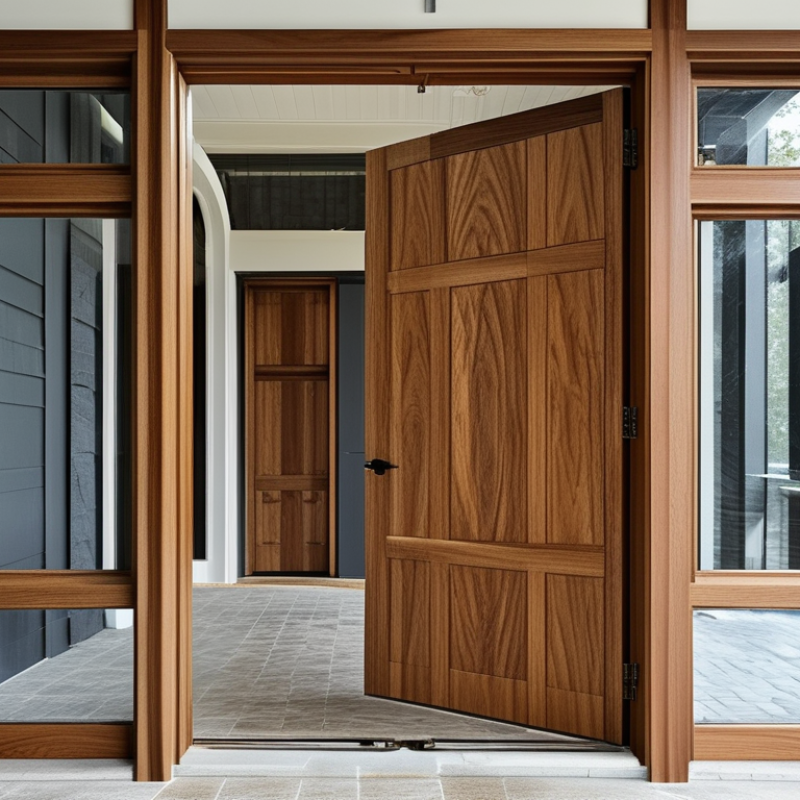
China’s wood door designs are shifting from ornate decoration toward calm, adaptable interiors. Grand View Research estimates the global interior doors market will grow at about 4.8% annually through 2030. This supports demand for export-ready designs with broad appeal. Flush oak doors, slim-frame glass doors, matte walnut finishes, and concealed hinges now appear among the top ten design directions. They fit apartments, hotels, and modern offices.
Sustainability is becoming a purchasing factor, not a decorative detail. The FAO’s Global Forest Resources Assessment 2020 states that forests cover 31% of the world’s land area. Global buyers therefore examine timber traceability, formaldehyde emissions, and coating durability. Engineered wood can improve dimensional stability in humid regions. However, “eco-friendly” claims still require documentation. A product label alone proves very little.
Performance also shapes China’s global market. Doors with acoustic cores, moisture-resistant edges, and fire-rated construction attract commercial buyers. The International Energy Agency reports that buildings account for around 30% of global energy demand. Better-sealed doors can support indoor comfort, especially in air-conditioned spaces. Yet design trends are not universal. A pale ash finish may suit Scandinavia, but darker grain often feels warmer in the Middle East. Exporters should test samples under local humidity, not rely on showroom appearance. Small details matter. Door weight, hinge alignment, packaging strength, and installation instructions often decide whether a beautiful design succeeds overseas.
| Rank | Wood Door Design | Key Visual Features | Common Wood and Construction | Typical Door Size | Popular Surface Finish | Common Applications | Design Trend Shaping Global Demand | Export Suitability |
|---|---|---|---|---|---|---|---|---|
| 1 | Modern Flush Veneer Door | A clean, flat face with concealed or minimal detailing and straight architectural lines. | Engineered wood core with natural wood veneer, reconstituted veneer, or high-density fiberboard components. | Common leaf thickness: 40–45 mm Typical height: 2,000–2,400 mm Typical width: 700–1,000 mm |
Matte clear coat, open-pore finish, smoked oak tone, walnut tone, or painted surface. | Apartments, hotels, offices, villas, and contemporary residential interiors. | Minimalism Neutral wood tones and uninterrupted surfaces coordinate easily with modern interior schemes. |
Easy to customize for different wall systems, hardware layouts, and interior color palettes. |
| 2 | Shaker Panel Door | A recessed central panel framed by simple vertical and horizontal rails and stiles. | Solid wood, finger-jointed wood, veneered engineered core, or a mixed solid-wood frame with a stable panel. | Common leaf thickness: 40–45 mm Typical height: 2,000–2,400 mm Typical width: 700–1,000 mm |
White, warm gray, muted green, natural oak, or satin painted finish. | Family homes, townhouses, apartments, and hospitality projects. | Transitional style Combines traditional panel construction with simple proportions that suit both classic and modern spaces. |
Broad international appeal and straightforward production in common single- and double-door configurations. |
| 3 | Vertical Slatted Wood Door | Repeated vertical battens or grooves create rhythm, texture, and a semi-dimensional façade. | Veneered engineered wood, solid wood battens, or grooved MDF with a wood-look finish. | Common leaf thickness: 40–50 mm Typical height: 2,100–2,400 mm Typical width: 800–1,200 mm |
Natural oak, ash, walnut, dark stain, or transparent matte lacquer. | Feature entrances, hotel rooms, living rooms, restaurants, and office interiors. | Biophilic texture Vertical lines add warmth and visual height while connecting interior architecture with natural materials. |
Suitable for premium projects, although slat alignment and protective packaging require careful quality control. |
| 4 | Natural Oak Veneer Door | Visible grain patterns, understated framing, and a warm wood appearance with minimal decoration. | Stable engineered core faced with oak veneer; edge bands and backing layers improve dimensional consistency. | Common leaf thickness: 40–45 mm Typical height: 2,000–2,400 mm Typical width: 700–1,000 mm |
Clear matte lacquer, brushed texture, light natural stain, or UV-cured coating. | Residential developments, hotels, offices, and Scandinavian or Japandi interiors. | Natural materials Light-toned wood and authentic grain remain popular in low-visual-noise interior design. |
Good material efficiency and consistent appearance compared with doors made entirely from wide solid-wood boards. |
| 5 | Arched Top Wood Door | Rounded or elliptical head profile that softens the entrance and creates a distinctive architectural focal point. | Engineered wood core with shaped veneer, laminated timber, or carefully joined solid-wood components. | Common leaf thickness: 40–50 mm Typical height: 2,100–2,600 mm Typical width: 800–1,200 mm |
Natural wood stain, hand-brushed texture, neutral paint, or aged-looking matte finish. | Villas, boutique hotels, restaurants, heritage-inspired homes, and luxury interiors. | Soft geometry Curved forms are increasingly used to contrast with rigid rectilinear walls and furniture. |
High visual value for custom projects; accurate templates and confirmation of opening dimensions are essential. |
| 6 | Wood and Glass Panel Door | Wood rails and stiles combined with clear, frosted, fluted, or textured glass panels. | Solid or engineered wood frame with tempered, laminated, or decorative safety glass. | Common leaf thickness: 40–50 mm Typical height: 2,000–2,400 mm Typical width: 700–1,200 mm |
Clear wood coating, painted frame, smoked glass combination, or light oak finish. | Kitchens, studies, offices, hotels, dining rooms, and spaces requiring borrowed light. | Light sharing Glazed sections improve daylight flow and visual connection while preserving a defined room boundary. |
Attractive for space-efficient interiors; glass type, safety standards, and protective transport packaging must be specified. |
| 7 | Solid Wood Pivot Door | A wide statement door rotating on concealed floor and head pivots rather than conventional side hinges. | Laminated solid timber, engineered wood slab, or a reinforced wood-composite construction to control movement. | Common leaf thickness: 50–80 mm Typical height: 2,200–3,000 mm Typical width: 1,000–1,800 mm |
Natural oil, exterior-grade coating, dark stain, charred-look finish, or textured veneer. | Luxury villas, high-end residences, show homes, and architectural entranceways. | Oversized entrances Large-format doors create a strong first impression and support statement architecture. |
Premium product category with strong project value; structural calculations, hardware compatibility, and installation support are important. |
| 8 | Sliding Barn-Style Wood Door | A horizontally sliding door with exposed or concealed track hardware and broad timber or panel surfaces. | Solid wood boards, veneered engineered panels, or framed panels with reinforced hardware fixing zones. | Common leaf thickness: 35–50 mm Typical height: 2,000–2,400 mm Typical width: 800–1,200 mm |
Reclaimed appearance, wire-brushed texture, natural stain, blackened wood, or painted finish. | Bedrooms, bathrooms, pantries, offices, restaurants, and compact residential layouts. | Space efficiency Sliding operation reduces swing clearance and supports flexible planning in smaller rooms. |
Convenient for renovation markets; wall structure, track length, soft-closing hardware, and clearance must be checked before installation. |
| 9 | Louvered Wood Door | Angled or horizontal slats provide airflow and filtered light while maintaining a wood-framed appearance. | Moisture-resistant engineered wood, solid timber frame, or painted wood with fixed or adjustable louvers. | Common leaf thickness: 35–45 mm Typical height: 2,000–2,400 mm Typical width: 600–900 mm |
Moisture-resistant paint, clear protective coating, natural stain, or smooth white finish. | Utility rooms, wardrobes, ventilation areas, coastal homes, and tropical interiors. | Passive ventilation Louvered construction supports airflow where privacy and ventilation are both required. |
Practical for warm and humid climates; coating systems, moisture resistance, and ventilation-area requirements should be confirmed. |
| 10 | Carved and Fluted Decorative Door | Relief carving, geometric grooves, fluting, or CNC-patterned details create a decorative front surface. | MDF or engineered wood substrate with veneer, paint-grade surface, or solid wood decorative elements. | Common leaf thickness: 40–50 mm Typical height: 2,000–2,400 mm Typical width: 700–1,000 mm |
Natural veneer, metallic accent, monochrome paint, two-tone finish, or hand-applied textured coating. | Feature rooms, hotel suites, luxury residences, reception areas, and themed interiors. | Craft-inspired detail Textured surfaces add individuality while digital cutting enables repeatable custom patterns. |
Well suited to made-to-order programs; relief depth, edge protection, finishing consistency, and cleaning requirements should be documented. |