What Are Quality Front Doors Made Of?
A front door is more than a finish choice. It is a weather barrier, a security boundary, and a daily-use component that must keep working through years of opening, closing, and exposure. Quality front doors may be made from fiberglass, steel, solid wood, or engineered materials. But the slab alone does not determine performance. The frame, threshold, seals, hinges, and installation matter just as much.
Building-science expert Joseph Lstiburek has warned, “Water is the most destructive force on buildings.” That warning applies at the entry, where wind-driven rain can test seals and thresholds. A convincing door should therefore pair a suitable material with careful detailing. A heavy-looking door is not automatically a durable one. That distinction is easy to miss.
There is also a financial signal, though it needs context. Zonda’s 2024 Cost vs. Value report estimated that replacing a steel entry door cost an average of $2,355 nationally and returned $4,430 in resale value. The reported cost recouped was 188.1 percent. This is a project-level estimate, not a promise of resale profit or proof that every steel door is high quality. Still, it shows why entry-door choices attract attention. In the sections ahead, we will compare materials, construction, weather resistance, security features, and maintenance. The goal is practical: identify what supports lasting performance, and what may only look impressive in a showroom.
The Core Components of a Quality Front Door
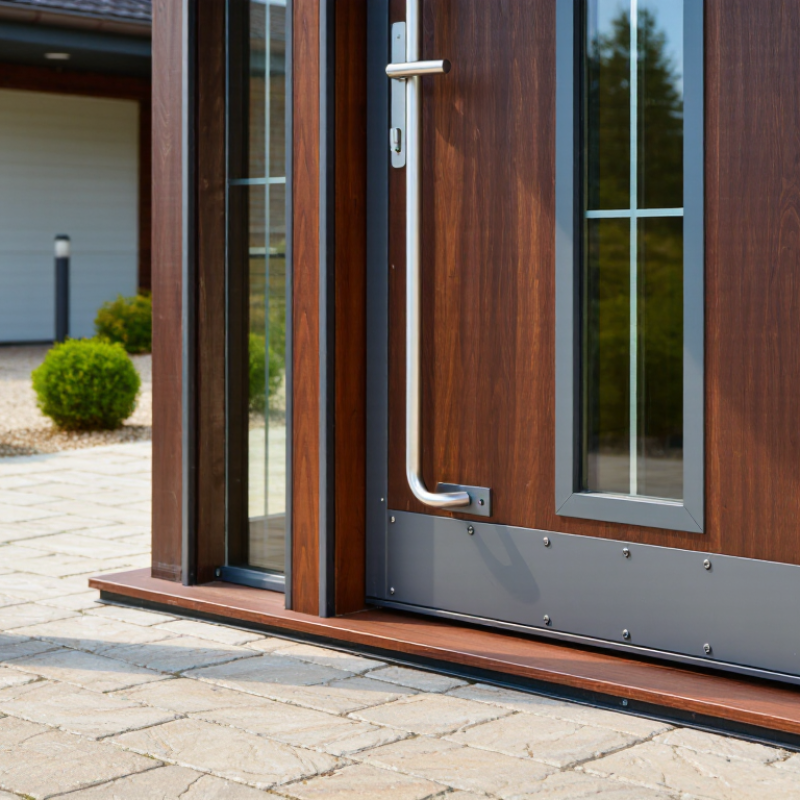
A quality front door is made from more than an attractive outer panel. Its slab, frame, seals, threshold, hardware, and installation work together to control drafts, resist daily wear, and open smoothly. A sturdy slab may use wood, fiberglass, or insulated steel, each with different care needs. The material alone does not determine performance.
The core begins with a stable slab and a frame that stays square. Insulation inside the slab can help limit heat transfer, while tight weatherstripping reduces air leaks around the edges. Look for a threshold that meets the floor without leaving a visible gap. Hinges should support the door’s weight without sagging, and the latch should engage cleanly. If the door has glass, well-sealed glazing helps keep moisture from reaching the surrounding material. Small details matter. Even a well-made door can disappoint when the frame is installed out of square; that issue is easy to overlook during a quick showroom visit.
Tips: Check the door from both sides. Run a hand near the closed edges to feel for drafts, and test the latch several times. Ask how often seals and finishes need inspection. No door is maintenance-free.
What Are Quality Front Doors Made Of?
Typical whole-door R-values by construction type
Insulated steel and fiberglass doors commonly provide higher thermal resistance than solid wood doors. These are approximate typical whole-door R-values; actual performance depends on the core, thickness, glazing, seals, and tested design. Higher R-values indicate greater resistance to heat flow.
How Solid Wood Is Used in Front Door Construction
Solid wood gives a front door its structure, weight, and visible grain. In many traditional designs, vertical stiles and horizontal rails form the frame. Carefully fitted panels sit between them, creating a substantial door without relying on one oversized slab. Oak, mahogany, and other durable species are often chosen for their strength and appearance. Species matter, but workmanship matters just as much.
The joints deserve close attention. Mortise-and-tenon connections, for example, can join rails and stiles while allowing modest seasonal movement. Panels are often set into grooves rather than glued rigidly along every edge. This detail helps reduce stress as humidity changes. A well-built door also has balanced proportions, tight joinery, and a consistent finish across its faces and edges. Small gaps can invite moisture.
Solid wood still responds to its surroundings. Dry winter air may cause slight shrinkage; damp weather can make the material swell. Even careful construction cannot make wood perfectly still. That is worth remembering. A sheltered entry, sound weatherstripping, and periodic finish checks help protect the door. Look closely at corners, panel edges, and the bottom rail, where wear often appears first. Grain catches the eye, but durable construction depends on stable stock, thoughtful joinery, and ongoing care.
Why Steel Is Chosen for Strength and Security
Steel is chosen for front doors because its outer skin resists bending, dents, and concentrated impacts. Many quality doors combine steel faces with an insulated core, while reinforced lock areas help resist damage around the latch. The whole assembly matters, though: a strong slab fitted to a weak frame can still give way.
The FBI’s 2019 Crime in the United States report recorded 1,117,696 burglaries, with 55.7% involving forcible entry. That figure covers all entry points, not just front doors, but it shows why resistance matters.
Steel Door Institute technical guidance also emphasizes evaluating doors and frames as systems, rather than judging a door by its surface alone. A deadbolt, solid strike plate, secure hinges, and sound installation all contribute to security.
Steel is not magic. A thin skin, poor fit, or exposed hinges can undermine its advantages, and damaged coatings may allow rust to develop. Look closely at the frame-to-wall connection and the reinforcement around the lock. Those details are easy to miss. It is also worth checking the door’s tested performance, not assuming every steel model offers the same protection.
How Fiberglass Combines Durability and Insulation
A quality front door must handle more than a polished first impression. It faces rain, changing temperatures, and daily use. Fiberglass is valued because it can resist moisture and does not rust. Its surface may also be molded to resemble painted wood, including subtle grain and panel details.
The insulation story depends on the whole door, not just its outer skin. Many fiberglass doors have a foam core that slows heat transfer. This can help reduce drafts and make rooms near the entrance feel more comfortable. A snug frame, weatherstripping, and a properly adjusted threshold matter too. Even a well-insulated slab can underperform if cold air slips around its edges.
Small details count. Check that the door closes evenly, with no visible gaps along the jamb. In a cold climate, that quick inspection can reveal more than appearance alone. Fiberglass can still be scratched or damaged by impact, and finishes may need care over time. I would not treat it as maintenance-free. Its performance also varies with construction and installation, so ask about the core, edge sealing, and warranty terms before choosing. A sturdy door is a system, not just a material.
What Are Quality Front Doors Made Of? - How Fiberglass Combines Durability and Insulation
| Door Type or Component |
Typical Materials |
Insulation and Durability |
Practical Considerations |
| Insulated fiberglass door |
Molded fiberglass skins over a foam-filled core, commonly polyurethane |
The foam core helps reduce heat transfer. Many insulated slabs are rated around R-5 to R-6, though ratings vary by design and manufacturer. Fiberglass resists rust and is less prone to denting than thin steel. |
Can be finished in a smooth or wood-grain appearance. Check the product’s published rating and care instructions; exposed edges and the finish still need protection. |
| Insulated steel door |
Painted steel skins with a foam-insulated core |
Foam-filled models can offer insulation comparable to many fiberglass doors. Steel is strong, but the surface can dent, and damaged coatings may allow corrosion. |
Often a practical, low-maintenance option. Keep the finish intact, especially at edges and scratches, to help prevent rust. |
| Solid-wood door |
Joined solid wood, with construction varying by species and design |
Wood provides some natural insulation, but a typical solid-wood door generally insulates less than a well-sealed, foam-core door. Wood can expand or contract as moisture and temperature change. |
Offers a natural appearance and can be refinished. Regular inspection and maintenance of the finish help protect it from moisture and weather. |
| Frame, weatherstripping, and threshold |
Wood, composite, or other frame materials; compressible weather seals; adjustable or fixed threshold |
These parts do not change the door slab’s insulation rating, but a well-fitted frame and continuous seals help limit drafts and air leakage. |
Installation matters: gaps, worn seals, or a poorly adjusted threshold can reduce comfort and energy performance regardless of door material. |
|
Note: R-values are approximate examples for door slabs, not guarantees. Ratings depend on construction and testing method; the complete installed doorway also depends on the frame, glazing, seals, and installation quality.
|
The Role of Glass, Finishes, and Weather Seals
A quality front door is a system, not just a solid slab. Glass can brighten an entry and make a narrow hallway feel more open. For better insulation, look for sealed double-pane units and check how the glass sits within the frame. A loose-looking edge or uneven gap deserves a closer look. Light should come in, not drafts.
Finishes protect the door from sun, rain, and everyday contact. On wood, a durable exterior coating helps limit moisture uptake, but exposed edges and lower corners may wear sooner. Fiberglass and steel also need suitable finishes; neither is maintenance-free. I have seen people focus on the panel color and overlook the frame. That detail matters. Ask how often the finish needs inspection, and follow the maker’s care instructions rather than assuming one schedule fits every climate.
Weather seals do quiet, important work around the head, sides, and threshold. Compressible gaskets should meet evenly when the door closes, while a sweep helps reduce air and water movement at the bottom. A seal that is too tight can make latching difficult; one that barely touches may leave a cold line near your feet. Check seals for flattening, splits, or gaps, especially after seasonal temperature changes. A quick hand check helps, though it is not a full inspection. Even a well-made door can perform poorly if it is installed out of square.