No source articles were included, so I can’t responsibly cite an industry report or provide a verifiable quotation from a named flush-door expert. Please share the articles or the expert and report you want cited, and I can write the introduction to your specifications.

A flush door has flat, plain faces rather than raised panels or decorative rails. Its simple surface suits modern rooms, but the construction inside can vary considerably. Many doors use a timber frame with thin face sheets bonded to both sides. The frame usually includes vertical stiles and horizontal rails, with a lock block placed where hardware will be fitted. The faces may be veneer, plywood, or a manufactured fiberboard.
The core affects weight, sound, and feel. Hollow-core doors often have a light internal grid or honeycomb filling, so they are easier to handle but offer less sound reduction. Solid-core versions use denser material and usually feel sturdier when closed. Not every solid core performs alike; check product specifications rather than judging by weight alone. During manufacture, adhesive bonds the face sheets to the frame and core under pressure. A poorly made bond may later show as a bubble or edge separation. Small flaws can matter.
Tips: Check that the door is flat and its edges are sealed, especially in humid rooms. Confirm the core and hardware block before ordering. A smooth finish looks clean, but dents may be noticeable. Don’t assume.
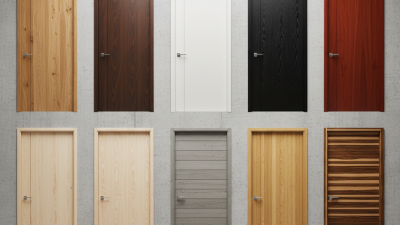
Solid-core flush doors use a dense interior core, often made from engineered wood, beneath smooth face panels. Unlike hollow-core doors, they feel substantial when opened and tend to resist everyday knocks better. They can also reduce sound transfer between rooms, though they will not make a space soundproof. A tight frame, good seals, and careful installation matter just as much as the door itself.
They are heavier. That matters.
Strong hinges and a well-aligned frame help prevent sagging, especially on frequently used doors. In a bedroom or home office, the added mass can make conversations and hallway noise less distracting. Solid-core construction may also provide a more stable base for hardware, but cutouts and edge details still need proper care.
Moisture is another consideration: prolonged dampness can damage wood-based materials, so bathrooms and other humid areas need suitable finishes and ventilation. For fire protection, rely only on a door assembly with a verified rating; a solid core alone does not establish one.
Performance varies. That is easy to overlook.
When choosing, compare the door’s weight, finish, intended location, and installation requirements, rather than assuming every solid-core model performs alike.
Hollow-core and cellular flush doors are light, flat-panel doors, but the terms describe different things. Hollow-core usually refers broadly to a door with a lightweight interior rather than a solid timber core. Cellular-core describes an interior built from many small cells, often in a honeycomb pattern. In practice, a cellular core is one common kind of hollow core, so product labels can overlap. The naming is not perfectly consistent.
That difference can affect weight, feel, and performance. A cellular structure supports the door’s outer skins while keeping material use low. It is easier to lift and hang than a solid-core door, but it may feel less substantial when closed. Sound reduction is usually modest, and a sharp impact can dent the thin face. Check the door’s stated core construction, thickness, and intended use instead of relying on the label alone. A hollow interior is not automatically fragile, but neither is every cellular door equally sturdy. Small details matter, such as the edge framing around hinges and the lock. I would inspect those areas closely; they are easy to overlook in a showroom.
| Flush Door Type | Typical Core Construction | Weight and Strength | Common Uses | Key Considerations |
|---|---|---|---|---|
| Hollow-core | Lightweight interior core with large voids or a sparse internal structure, usually supported by perimeter rails and local blocking near hardware. | Generally light and easy to handle; offers less resistance to impact and less sound reduction than a solid-core door. | Interior rooms where low weight and economical construction are priorities. | Check the door’s construction before attaching heavy hardware; the core may provide limited fixing support away from reinforced areas. |
| Cellular-core | A regular network of small cells, often made from paper-based honeycomb material, held between the door facings and frame components. | Usually lightweight; the cell pattern supports the facings, but performance depends on cell design, facings, and frame construction. | Interior doors where a lightweight, structured core is suitable. | “Cellular” describes the core’s cell-like structure. Some products described as hollow-core use a cellular honeycomb core, so the terms can overlap. |
| Solid-core | A dense core, commonly made from engineered wood or a composite material, beneath the flush facings. | Heavier and generally more substantial than a hollow-core door; often provides better sound reduction, though results vary by construction and installation. | Rooms where a more solid feel, greater durability, or improved sound control is desired. | Requires suitable hinges and frame support because of its greater weight. It is not automatically fire-rated. |
| Particleboard-core | A core made from wood particles bonded with resin, typically covered by smooth door facings. | Dense and relatively heavy; performance depends on the board, facings, and the quality of the door’s edges and joints. | Interior applications needing a denser core than a lightweight hollow construction. | Protect from prolonged moisture exposure unless the product is specifically designed and rated for that environment. |
| Timber-stave core | A core assembled from solid-wood strips or staves, with flush facings applied to its surfaces. | Typically sturdy and heavier than a hollow-core design; exact stability and strength depend on materials and assembly. | Interior doors where a wood-based core and solid feel are preferred. | Wood can respond to changes in humidity, so appropriate finishing and installation conditions matter. |
| Mineral-core | A core containing mineral-based material, used in doors engineered for particular performance requirements. | Often heavier than lightweight cellular designs; fire performance depends on the complete tested door assembly. | Specified applications that call for a tested fire-rated door set. | Confirm the label, rating, frame, seals, hardware, and installation requirements; a mineral core alone does not establish a fire rating. |
| Quick distinction: Hollow-core is a broad description for a lightweight door with a non-solid interior. Cellular-core describes an internal network of cells and may be one form of hollow-core construction. Product terminology varies, so compare the manufacturer’s core description and tested performance rather than relying on the label alone. | ||||
Specialty flush doors protect spaces from fire or unwanted noise, but their performance depends on the complete assembly. NFPA’s Home Structure Fires report estimates an average of 346,800 U.S. home structure fires annually from 2015 to 2019. A fire-rated door can help limit fire and smoke spread when correctly specified and maintained. Ratings are based on tested assemblies under standards such as NFPA 252 or UL 10C—not on the door slab alone. Frames, latches, closers, and listed seals matter.
For sound control, look for a tested Sound Transmission Class (STC) rating. ASTM E90 measures airborne sound transmission in a laboratory; ASTM E413 classifies the results. A heavier core, tight perimeter seals, and a properly sealed threshold can reduce sound leaks. Yet STC is not a promise of silence, and low-frequency noise may still travel through walls or gaps. Small gaps matter.
Tips: Match the rating to the room’s actual use, then verify the frame and hardware are compatible. For fire doors, follow the assembly’s inspection and maintenance requirements, including NFPA 80 guidance. For acoustic doors, check seals for light or air leaks; even a thin gap can undermine performance. One detail is easy to overlook: a well-rated door cannot fix a weak wall. NFPA report: Home Structure Fires, 2021.
Common flush-door types include hollow-core and solid-core doors for general use, plus specialty fire-rated, acoustic, and combined fire-and-acoustic doors.
Fire-rated flush doors are tested as assemblies, including the door, frame, hardware, and seals. The ratings shown are common durations; the rating available and required depends on the tested assembly and local building code. Acoustic flush doors are specified by sound-transmission performance (often an STC rating), which varies by construction and installation.
Choose a flush door by considering traffic, privacy, moisture, and maintenance, not appearance alone. Hollow-core doors suit low-traffic interior spaces such as closets or spare rooms, where light weight and lower cost matter. They offer less sound control and can feel less substantial. Quiet matters.
Solid-core doors are often a better fit for bedrooms, home offices, and rooms beside busy living areas. Their added mass can reduce everyday noise, but they need sturdy hinges and a well-aligned frame. A heavier door is not automatically the better choice if the frame is not suited to it. For bathrooms or utility rooms, look for moisture-resistant construction and sealed edges. Repeated steam exposure can damage an ordinary interior door, so ventilation and careful fitting matter too.
Use a fire-rated flush door only where the building plan or applicable requirements call for one, and confirm that its frame and hardware are compatible. Exterior locations need a door built to resist weather, with suitable seals around the edges. One detail is easy to overlook: even a well-matched door may perform poorly if gaps, fitting, or upkeep are ignored. Choose the construction for the room’s real conditions, not just its label.