
Choosing door by door shipping in 2026 requires more than comparing prices on a delivery website. The right service should connect the sender’s address directly with the recipient’s door, while managing pickup, transport, customs coordination, and final delivery. A low quote may hide fuel surcharges, residential fees, storage costs, or limited insurance coverage. Those details matter when shipping furniture, business samples, or time-sensitive personal belongings.
Reliable decisions begin with verified information. Check the carrier’s operating history, service coverage, tracking system, claims process, and customer reviews. Ask whether the quoted price includes collection, documentation, duties, taxes, and delivery to the exact address. A professional provider should explain customs requirements clearly and accept only properly declared, lawful goods. Vague answers are a warning sign.
Small details can prevent large problems. Measure the package carefully. Photograph its condition before pickup. Confirm the delivery window in writing. Also, check whether the destination has stairs, narrow entrances, parking restrictions, or remote-area fees. Door by door shipping sounds simple, but the final few meters often create the greatest uncertainty.
No checklist is perfect. Rates can change. Delays still happen. A trusted provider should communicate early, offer realistic timelines, and explain practical alternatives. This guide examines the factors that matter most in 2026, helping readers balance cost, speed, protection, and service reliability before booking.
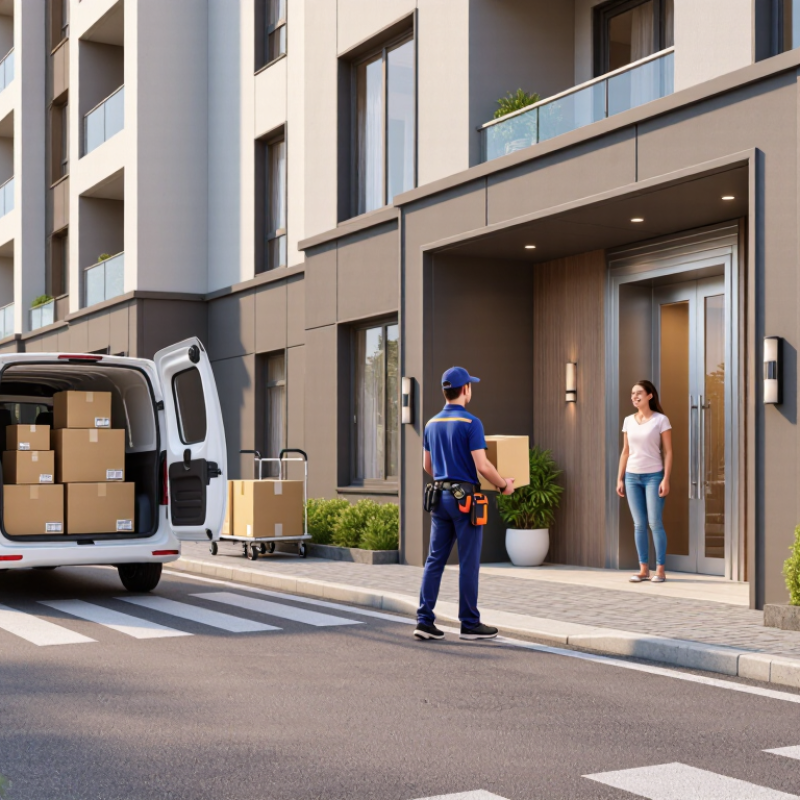
Door-to-door shipping in 2026 means one coordinated service from the sender’s address to the recipient’s door. It usually includes pickup, transport, customs preparation, import handling, final-mile delivery, and shipment tracking. The carrier may manage several transport modes. The customer should still understand each handoff.
This model is increasingly important because global trade remains highly dependent on logistics networks. UNCTAD’s Review of Maritime Transport 2024 reports that ships carry over 80% of global merchandise trade by volume. However, ocean freight is only one part of delivery. The World Bank’s Logistics Performance Index 2023 evaluated 139 economies and highlighted major differences in customs, infrastructure, tracking, and delivery reliability. A low quote may hide storage fees, remote-area charges, or unpaid import taxes. That is the weak point.
Tips: Ask whether the price includes pickup, customs support, duties, insurance, and final delivery. Request a written delivery window, not only an estimated date. Check tracking updates at every transfer point. For fragile goods, confirm packaging standards and liability limits before payment. Measure delivery performance over several shipments, because one successful parcel proves little. I would also question “all-inclusive” claims. They sound convenient, but exceptions are common. A clear shipping agreement is usually more valuable than a slightly cheaper rate.

How to Choose Door by Door Shipping in 2026?
Which Shipment Details Determine the Right Service
Choosing door-to-door shipping starts with accurate shipment details. Record the pickup and delivery addresses, package dimensions, weight, and preferred delivery date. A narrow apartment entrance may require special handling. A rural destination may need an access check. Small details matter. Service selection also depends on urgency. Standard delivery often suits flexible schedules, while time-sensitive freight may need a faster, closely tracked option. Confirm whether pickup includes indoor collection or only curbside service.
Tips: Measure each package after sealing it. Photograph fragile items before handover. Ask about tracking updates, delivery attempts, signature requirements, and compensation limits. Share realistic deadlines, not hopeful ones.
I once underestimated the space needed for a large carton. That assumption was wrong. The vehicle arrived, but the building entrance created a delay. In 2026, shipment data should be checked before booking, not after pickup. Review package contents and documentation carefully, especially for international delivery. Use clear descriptions and accurate declared values. Compare services by total cost, handling conditions, transit time, and support availability. The cheapest quote may exclude stairs, waiting time, or remote-area delivery. Reliable shipping comes from matching the service to the actual shipment, including its awkward parts.
How to Choose Door by Door Shipping in 2026?
Compare carriers by evidence, not polished promises. Ask for active operating authority, cargo insurance limits, inspection procedures, and a written claims process. The American Transportation Research Institute reported average trucking costs near $2.27 per mile in 2023. That figure does not set your vehicle’s price, but it explains why extremely low quotes deserve questions. I once chose the cheapest option without checking access restrictions. That shortcut was wrong.
Route planning changes the delivery experience. Check highway mileage, seasonal weather, construction zones, and rural access before booking. A large carrier may reach your city, but not your narrow residential street. Confirm whether the driver can use a liftgate, trailer, or nearby public meeting point. Request pickup and delivery windows, not vague promises. A two-day range is more useful than “fast delivery.”
Compare delivery options carefully. Open transport usually costs less, while enclosed transport offers stronger protection from road debris and weather. Terminal delivery can reduce complexity, but door service saves handling time. The 2024 State of Logistics Report placed U.S. logistics costs at 12.7% of GDP in 2023, showing how fuel, labor, storage, and delays affect pricing. Still, reports cannot predict every driveway. Review exclusions, cancellation terms, damage documentation, and payment timing. Keep photographs from every angle. Small details matter.
How to Choose Door by Door Shipping in 2026?
A door-to-door quote should show every cost, not hide it inside one attractive number. Ask for pickup, line-haul, fuel, residential, remote-area, handling, and delivery charges. Confirm whether duties, taxes, brokerage, storage, and inspection fees are included. A cheap quote can become expensive quickly. The World Bank’s 2023 Logistics Performance Index compared customs, infrastructure, and timeliness across 139 economies. That difference matters when estimating delivery risk. Request a landed-cost worksheet before paying.
Insurance deserves separate attention. Check whether coverage uses the invoice value, replacement value, or a carrier’s limited liability. Ask about exclusions for weak packaging, moisture, delay, and unattended delivery. Photograph the carton, labels, and contents before collection. Keep invoices and packing records. Claims often fail because evidence is missing. I still leave a small contingency budget, because real shipments rarely behave perfectly.
Customs accuracy is not optional. Provide the correct HS code, commercial value, origin, quantity, and importer details. Never let a provider “guess” the classification. The World Trade Organization reported that full trade-facilitation implementation could reduce trade costs by 14.3% on average. Check the destination authority’s 2026 rules directly, especially for tax thresholds and document requirements. Delivery terms also need clarity: identify who pays duties and who becomes responsible at import. Get that in writing.
This planning example assumes goods valued at $500, transport charges of $80, insurance at 1% of the goods value, an illustrative customs duty of 8% on the CIF value, and VAT/GST of 20% on the CIF value plus customs duty.
Before booking, confirm whether the quotation includes pickup, delivery, fuel surcharges, insurance, customs duty, VAT/GST, brokerage, and destination handling fees. Customs rates and tax bases vary by product classification, origin, destination, and local rules.
How to Choose Door by Door Shipping in 2026?
A reliable door-to-door shipment begins with a precise booking request. Record the pickup and delivery addresses, package dimensions, weight, contents, and preferred pickup window. Ask for a written quote that separates transport fees, handling charges, taxes, and optional coverage. Small details matter.
Before confirming, check the carrier’s operating history, service terms, and customer support process. Experienced providers explain collection procedures clearly and provide a booking reference. Upload clear photos of the sealed parcel, label, and visible condition. Keep the receipt. Do not guess.
After pickup, use the tracking number on the carrier’s official tracking page. Look for practical scan events, such as “collected,” “at sorting facility,” and “out for delivery.” A status that remains unchanged for several days deserves a written inquiry. Tracking is useful, but it is not proof that every transfer happened correctly.
At delivery, verify the recipient’s name, package count, seal, and outer condition before signing. Photograph dents, tears, or moisture immediately, and note them on the delivery record. Compare the final record with your booking details. I have found that rushed handovers create avoidable disputes, even when the shipment arrives. Leave time for inspection. A smooth process still needs human attention.
| Shipment Stage | Decision Dimension | What to Check | Typical Data or Evidence | Recommended Action |
|---|---|---|---|---|
| 1. Prepare | Shipment profile | Origin and destination addresses, package count, dimensions, gross weight, cargo description, and declared value. | Use actual packed dimensions and weight. Carrier billing may use the greater of actual or volumetric weight. | Measure every carton after packing and keep photos of the sealed packages. |
| 2. Compare | Service coverage | Whether pickup, export handling, international transport, import clearance, taxes, and final delivery are included. | A complete door-to-door quote should identify included and excluded services in writing. | Request a line-item quotation instead of relying only on a single total price. |
| 3. Compare | Delivery speed | Estimated transit time, pickup window, customs assumptions, weekends, public holidays, and remote-area handling. | Transit estimates are normally business-day estimates and can change when customs documents are incomplete. | Choose the service based on the required arrival date, not the shortest advertised transit time alone. |
| 4. Compare | Total landed cost | Base freight, fuel or security surcharges, pickup fees, customs clearance, duties, taxes, storage, residential, and remote-area fees. | Duties and taxes depend on destination rules, product classification, customs value, and origin. | Ask which charges are prepaid and which may be collected from the recipient. |
| 5. Book | Trade and customs terms | Named shipper, importer of record, customs responsibility, delivery address, and agreed trade term. | The selected term should clearly state who handles transport, import clearance, duties, and taxes. | Confirm responsibilities before payment and keep the final booking confirmation. |
| 6. Book | Required documents | Commercial or pro forma invoice, packing list, transport label, permits where applicable, and accurate product description. | The invoice should normally include seller, buyer, quantity, unit value, currency, origin, and product description. | Avoid vague descriptions such as “goods” or “samples”; describe the actual product and materials. |
| 7. Pickup | Collection verification | Pickup date, address, contact person, carton count, package condition, and handover record. | A pickup scan or signed collection receipt should show that the shipment entered the transport network. | Compare the collected carton count with the booking and report discrepancies immediately. |
| 8. Track | Tracking quality | A unique tracking number, scan history, current location or event, timestamp, and exception notifications. | Common milestones include pickup, export processing, departure, arrival, customs clearance, out-for-delivery, and delivery. | Use the official tracking page supplied in the booking confirmation and save milestone screenshots. |
| 9. Customs | Document accuracy | Product classification, customs value, country of origin, quantity, and consistency across all documents. | Mismatched values, descriptions, or quantities can result in delays, reassessment, storage, or return. | Reply promptly to customs requests and provide supporting invoices or permits when requested. |
| 10. Verify | Delivery proof | Delivery date and time, recipient name or signature, location evidence where available, and package condition. | A proof-of-delivery record confirms completion but does not by itself prove that contents were undamaged. | Inspect cartons before signing and record visible damage on the delivery receipt. |
| 11. Verify | Final reconciliation | Delivered carton count, item quantity, condition, final charges, and any customs or storage invoices. | Keep booking records, invoices, tracking history, delivery proof, and damage photographs together. | Open a claim or billing dispute within the applicable contractual time limit if a problem is found. |