China Top 10 Flush Wood Door Manufacturers?

Choosing among China’s top 10 flush wood door manufacturers requires more than comparing catalog photos. A well-made flush wood door should feel balanced, close quietly, and maintain a stable surface through seasonal humidity changes. Its performance depends on the core, veneer, edge treatment, adhesive system, and finishing process. Small details matter. A weak bottom seal can invite moisture. Uneven veneer can reveal poor pressing control.

Gary Katz, a veteran finish carpenter and door-installation educator, puts it simply: “A door is only as good as its installation.” This observation shapes the evaluation behind this guide. Manufacturing capability matters, but so do packaging, technical drawings, hardware preparation, and after-sales support. A factory may produce attractive samples while struggling with consistent batches. That risk deserves attention.

This overview examines ten notable Chinese manufacturers through practical criteria, including material transparency, production experience, quality-control procedures, customization capacity, export history, and project communication. Certifications can support credibility, but they should not replace direct evidence. Buyers should request recent samples, test reports, finish specifications, and references from comparable projects.

The ranking is not absolute. Market data changes. Public information can also be incomplete. Some smaller factories may deliver excellent doors but lack polished English websites. Others may appear highly established while providing limited technical detail. That is an uncomfortable limitation, but it is worth stating. Readers should verify moisture resistance, fire ratings, lead times, warranty terms, and installation requirements before placing an order. A reliable flush wood door supplier welcomes those questions and answers them with documents, not vague promises.

China Top 10 Flush Wood Door Manufacturers?

What Are Flush Wood Doors and Why Are They Popular in China?

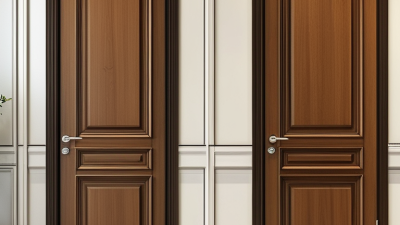
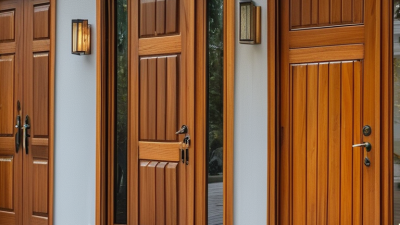
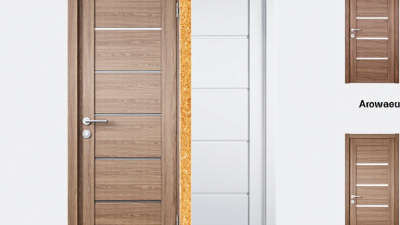
Flush wood doors have a smooth, flat surface with no raised panels or decorative grooves. Their core may use solid timber, engineered wood, or a honeycomb structure. This construction creates clean lines, stable dimensions, and easier maintenance in humid interiors.

Their popularity in China reflects practical housing needs. The National Bureau of Statistics reported that China’s urbanization rate reached 66.16% in 2023. More urban households mean stronger demand for compact, coordinated interior finishes. Flush doors fit apartments well because they save visual space and support modern decoration styles. Grand View Research’s global doors market report also identifies renovation, residential construction, and design flexibility as important demand drivers.

Simple design wins.

Manufacturers typically use veneer, laminate, or painted surfaces to control appearance and cost. Better factories monitor moisture content, adhesive bonding, edge sealing, and formaldehyde emissions through documented testing. These details matter more than attractive showroom photographs. In practice, uneven humidity can still cause warping when storage or installation is careless. That weakness deserves more attention. Buyers comparing China’s top ten flush wood door manufacturers should request test reports, production records, sample sections, and warranty terms. A low price may reflect thinner skins or weaker cores, not efficient manufacturing. Performance should be judged after installation, not only by touch.
China Top 10 Flush Wood Door Manufacturers? — What Are Flush Wood Doors and Why Are They Popular in China?

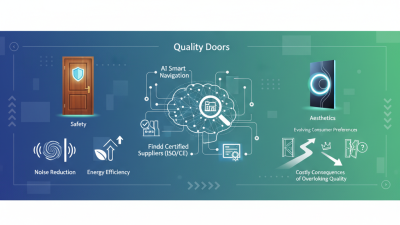
Flush wood doors are doors with smooth, uninterrupted surfaces and concealed or minimal framing. Their clean appearance, flexible finish options, and suitability for modern residential interiors contribute to their popularity in China. The chart below uses China’s official urbanization rate as a market-context indicator rather than company or brand data.

Source: National Bureau of Statistics of China, permanent-resident urbanization rate, 2019–2024.

How to Evaluate China’s Flush Wood Door Manufacturers

How to Evaluate China’s Flush Wood Door Manufacturers

Choosing among China’s flush wood door manufacturers requires more than comparing online prices.

Check factory experience, monthly capacity, export history, and quality records. Ask for production samples, not only polished catalog images.

The sample should show even veneer, tight edges, stable joints, and clean paintwork. Request the same inspection from several production batches. Consistency matters more than one excellent door.

Material verification needs careful attention.

Ask for the core type, veneer source, adhesive grade, moisture content, and finished-door weight. A door that feels unusually light may contain weak internal construction.

FAO’s Global Forest Resources Assessment 2020 reports that forests cover about 31% of global land area.

That figure makes responsible timber sourcing important, not decorative. Request chain-of-custody evidence and traceable purchase records. FSC certification can help, but certification alone does not prove manufacturing quality.

Test performance claims independently.

Require reports for dimensional stability, sound reduction, surface adhesion, and fire resistance when relevant. Check whether the testing laboratory is accredited and whether the report matches the exact door structure.

ISO 9001 certification shows process management, not guaranteed product performance. I have seen buyers trust certificates too quickly. That is a mistake.

Compare tolerances, packaging details, replacement procedures, and response times before signing. A reliable supplier explains defects clearly, including its own limits.

China’s Top 10 Flush Wood Door Manufacturers

China’s Top 10 Flush Wood Door Manufacturers are best assessed through capability, not popularity alone.

A reliable shortlist should include factories with stable core-drying, CNC cutting, veneer pressing, and controlled finishing processes. Grand View Research’s recent doors market analysis projects global growth at roughly 4% annually through 2030. That trend supports continued demand for engineered wood doors, especially in apartments, hotels, and office projects.

The strongest Chinese manufacturers usually provide moisture-resistant cores, concealed hinges, acoustic options, and repeatable color matching. Buyers should request factory audit records, EN or ASTM test reports, formaldehyde-emission results, and recent project references. China’s National Bureau of Statistics continues to show the importance of construction and property-related manufacturing, but broad sector data does not prove one factory’s quality. That distinction matters.

A practical top-ten comparison should examine annual capacity, veneer sourcing, kiln control, edge sealing, packaging, and after-sales response. Look closely at sample corners. Poor edging often appears before major surface defects.

Short sentences help here. Measure twice.

Some manufacturers report impressive output, yet provide limited evidence for batch consistency. That is a weakness worth recording, not ignoring. Buyers should also compare lead times under peak production, replacement policies, and third-party inspection access before approving a contract.

Key Differences in Products, Materials, and Customization

China’s top 10 flush wood door manufacturers often differ more in construction than appearance. Their flat surfaces may use natural veneer, engineered veneer, laminate, or painted MDF. A reliable comparison should inspect the core. Solid timber offers a warmer feel, while finger-jointed wood and honeycomb cores can reduce weight and cost. However, lower weight may mean weaker impact resistance.

Materials also affect environmental performance. The 2024 UNEP Global Status Report for Buildings and Construction states that buildings consume about 32% of global energy and produce 34% of global carbon emissions. Door buyers should therefore request recycled-content records, formaldehyde testing, and verified coating data. The FAO’s Global Forest Resources Assessment 2020 records approximately 4.06 billion hectares of forest worldwide. Responsible sourcing matters, even for one interior door.

Customization separates capable factories from catalog sellers. Standard options may cover height, width, veneer color, hinge position, and groove patterns. More advanced suppliers can adjust acoustic layers, concealed frames, fire-rated assemblies, and moisture-resistant edges. Ask for full-size samples, not only digital renderings. Site measurements should include wall thickness, floor tolerance, and opening direction. Small errors become visible around a flush panel.

A polished sample can hide uneven edge sealing.

I would not trust price alone. Check independent test reports, batch consistency, packaging protection, and installation guidance. The best manufacturer is not always the largest; it is the one that documents performance and admits limitations.

How to Choose the Right Chinese Flush Wood Door Supplier

How to Choose the Right Chinese Flush Wood Door Supplier

Choosing among China’s top flush wood door manufacturers requires more than comparing catalog prices. Check the supplier’s production experience, export history, and ability to handle your project type. Ask for factory videos, workshop addresses, and recent quality records. A reliable supplier should explain its timber sources, door-core structure, veneer options, and moisture-control process clearly.

Request a physical sample before signing a large order. Inspect its surface, edge bonding, hinge reinforcement, and dimensional accuracy. Place the sample in a normal indoor environment for several days. Watch for warping, bubbling, or uneven color. Ask for test reports covering fire performance, sound reduction, formaldehyde emissions, and other requirements relevant to your market. Documents matter. However, outdated reports can create false confidence.

Use a written specification sheet with drawings, tolerances, packaging details, and inspection stages. Confirm who pays for replacements when doors arrive damaged or incorrectly sized. A third-party inspection can verify quantity and workmanship before shipment. I have seen attractive samples hide weak edge sealing and inconsistent batches. That risk deserves attention. Also, do not choose solely by the lowest quotation. Low prices may reflect thinner veneers, lower-density cores, or incomplete hardware. Compare total cost, communication speed, production capacity, and after-sales response. A small trial order may reveal problems that a polished presentation conceals. Expect some mistakes. Record them, discuss corrections, and judge whether the supplier responds with evidence rather than promises.

China Top 10 Flush Wood Door Manufacturers? - How to Choose the Right Chinese Flush Wood Door Supplier

The following anonymous supplier-screening table uses verifiable technical requirements and common purchasing benchmarks. Supplier positions are not a brand ranking; buyers should confirm all specifications, certificates, samples, and production capacity before placing an order.

No. Anonymous Supplier Profile Key Evaluation Dimension Practical Benchmark for Flush Wood Doors Documents or Checks to Request
1 Supplier Profile A Core and panel construction Confirm whether the door uses solid timber, engineered wood, honeycomb, particleboard, or mineral core. The construction should match the required strength, weight, acoustic, and fire-performance targets. Product cross-section, material specification, density data, and an approved pre-production sample.
2 Supplier Profile B Moisture control A commonly used indoor wood moisture range is approximately 8%–12%, but the correct value depends on the destination climate and installation environment. Moisture-meter records, kiln-drying procedure, incoming-material inspection records, and climate-specific recommendations.
3 Supplier Profile C Formaldehyde emissions For low-emission interior products, request test results against the applicable market requirement, such as E1 under EN 717-1 or CARB Phase 2 and TSCA Title VI for composite wood products. Recent laboratory report identifying the tested panel, production date, test method, and issuing laboratory.
4 Supplier Profile D Dimensional accuracy Confirm allowable tolerances for height, width, thickness, squareness, warpage, and twist. Tolerances must be agreed in writing before production. Approved technical drawing, inspection checklist, calibrated measuring tools, and first-article inspection report.
5 Supplier Profile E Surface finish and durability Compare veneer, laminate, PVC, paint, or melamine finishes according to scratch resistance, color consistency, edge quality, cleaning resistance, and expected indoor use. Finish samples, color reference, coating specification, adhesion test, surface inspection standard, and care instructions.
6 Supplier Profile F Fire and acoustic performance Do not treat a standard flush wood door as fire-rated or sound-rated without a test report for the complete doorset, including leaf, frame, seals, glazing, and hardware where applicable. Complete-doorset test report, installation details, certification scope, and evidence that the proposed construction matches the tested assembly.
7 Supplier Profile G Hardware compatibility Check hinge reinforcement, lock-block location, handle height, closer compatibility, concealed hardware preparation, handing, and pre-drilling accuracy. Hardware schedule, shop drawings, drilling templates, reinforcement details, and a fully fitted sample when possible.
8 Supplier Profile H Quality management and traceability Prefer suppliers with documented incoming, in-process, and final inspections. ISO 9001 certification can support process control, but it does not replace product testing or buyer inspection. Valid certification scope, factory audit records, batch labeling system, corrective-action records, and inspection plan.
9 Supplier Profile I Production capacity and delivery planning A standard project may require several production weeks after drawing approval, while custom finishes, fire ratings, or large quantities require additional time. Delivery promises should be linked to approved specifications. Capacity statement, production schedule, raw-material lead times, packaging plan, and milestone-based delivery commitment.
10 Supplier Profile J Export packaging and after-sales support Packaging should protect corners, faces, edges, and hardware during international transport. Spare parts, replacement policy, installation guidance, and claims procedures should be defined before shipment. Packaging specification, loading photographs, carton or pallet marking, spare-parts list, warranty terms, and damage-claim process.