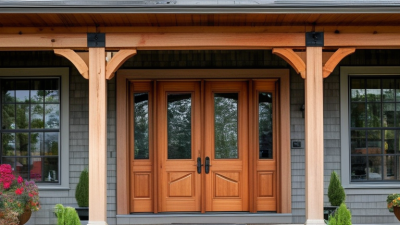
2026 Best Exterior Door Types for Global Buyers?
Choosing the right exterior doors in 2026 requires more than comparing colors, prices, or online ratings. Global buyers face different climates, building traditions, security concerns, and installation standards. A door that performs well in a Canadian winter may struggle in coastal Malaysia. Local context matters.
This guide examines the leading exterior door types for international residential and commercial projects. It considers fiberglass, steel, solid wood, aluminum, composite, and glass-panel designs. Each option is reviewed through practical criteria, including insulation, weather resistance, durability, maintenance, security, accessibility, and long-term value. We also consider manufacturing quality, hardware performance, threshold design, and compatibility with regional construction methods.
Small details often decide the outcome. A poorly sealed threshold can admit wind-driven rain. Dark metal surfaces may become extremely hot under direct sunlight. Wood can look exceptional, yet it needs disciplined maintenance in humid regions. Steel offers strength, but scratches may expose vulnerable areas. These realities deserve attention.
There is no universally best door.
Reliable recommendations should come from tested specifications, qualified installers, and transparent warranties. Buyers should verify thermal ratings, corrosion resistance, fire performance, and relevant local requirements before ordering. Certification systems also vary between markets, so assumptions can create expensive mistakes.
This overview aims to provide balanced, practical guidance rather than a perfect ranking. Some conclusions remain conditional. Budget, climate, design goals, and installation quality can change the answer. By comparing real-world strengths and limitations, global buyers can select exterior doors with greater confidence and fewer surprises.
What Defines an Exterior Door and Why Door Type Matters
An exterior door is more than a moving panel at a building’s edge. It forms the weather, security, and thermal boundary between indoor space and the outside. It may open to a street, garden, balcony, garage, or shared corridor. This definition matters because an interior-style door can swell, leak, or weaken under wind and sunlight. During site inspections, I check the frame, threshold, seals, drainage, hinges, and locking points—not only the door leaf. Small gaps become obvious during rain.
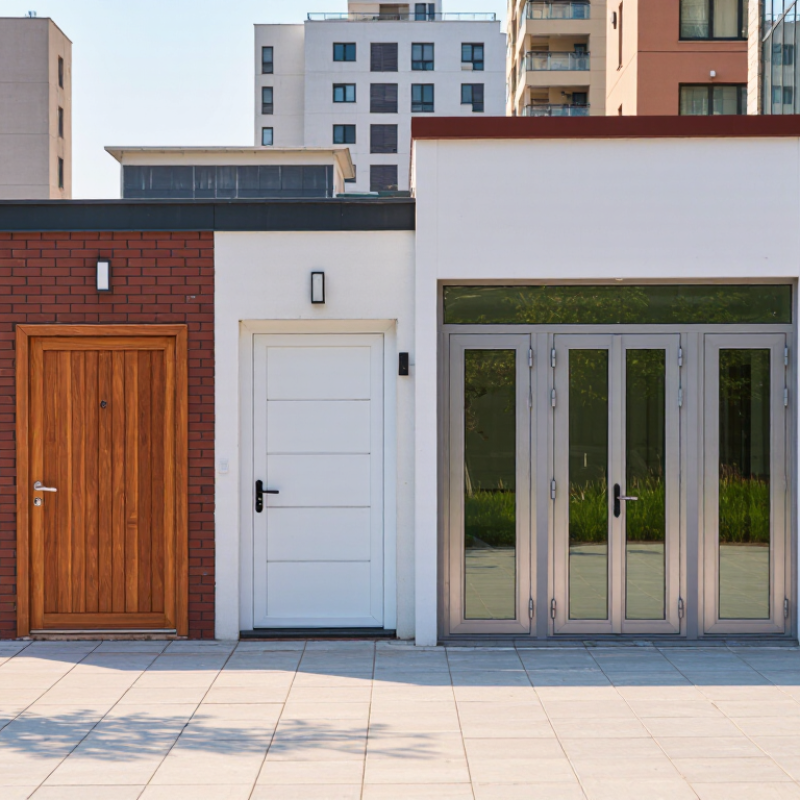
Door type matters because every opening faces different demands. A hinged door suits many homes and provides a familiar seal, but it needs clear swing space. It needs room. A sliding door saves space and brings daylight, yet its track requires careful drainage and regular cleaning. Pivot doors create a dramatic entrance, though their weight and air leakage require professional design. Steel, timber, aluminum, and fiberglass each offer different balances of strength, insulation, maintenance, and appearance.
For global buyers, climate and local building requirements should guide the specification. Hot regions may prioritize solar control and cross-ventilation. Cold regions need low heat transfer and dependable compression seals. Coastal locations demand corrosion-resistant hardware. Accessibility, glazing safety, emergency escape, and fire separation can also affect the correct choice. I have seen attractive doors underperform because installers ignored threshold height or wall movement. That was an uncomfortable lesson. Not always. The best type is the one matched to exposure, daily use, maintenance ability, and verified local requirements.
Major Exterior Door Types for Different Global Climates
2026 Best Exterior Door Types for Global Buyers?
Climate should guide exterior-door selection more than appearance. The World Meteorological Organization reported that 2024 was the warmest year recorded, at about 1.55°C above the pre-industrial average. Stronger heat, rain, and storms are changing performance expectations. In humid and tropical regions, fiberglass and well-sealed composite doors resist swelling better than untreated wood. They also need stainless or corrosion-resistant hardware. Coastal buyers should inspect hinges and thresholds carefully. Salt air is unforgiving.
Cold climates require insulated steel, fiberglass, or engineered wood doors with continuous weatherstripping. Low-conductivity frames and insulated cores reduce drafts around the opening. The International Energy Agency reports that buildings consume about 30% of global energy demand, so a poorly sealed door can undermine wider efficiency improvements. In hot, dry climates, thermally broken aluminum can work well, especially with a shaded entrance and reflective glazing. Standard aluminum remains a weak choice without thermal separation.
Windy regions need doors tested for local pressure, impact, and water penetration requirements. A heavier slab alone proves little. Installation matters just as much. The frame, sill, drainage path, and wall connection must work together. This is where specifications often become vague. I would not choose a door from climate labels alone. Real exposure, maintenance access, and installer experience can change the result. No material wins everywhere.
Key Materials, Construction Features, and Performance Differences
Choosing an exterior door in 2026 requires more than comparing colors and prices. Climate, installation quality, and daily use shape long-term performance. Fiberglass resists moisture, dents, and sunlight, making it practical for humid or coastal regions. Steel offers strong security and stable construction, but exposed edges may rust without proper protection. Engineered timber provides warmth and natural texture, though it needs careful sealing in wet climates.
Construction details often matter more than the surface material. A solid insulated core reduces heat transfer and outdoor noise. Multi-point locks improve compression around the frame. Continuous weatherstripping helps block wind-driven rain and dust. Low-threshold designs support accessibility, but they must manage water drainage correctly. Aluminum doors can suit modern buildings when they include thermal breaks. Without them, interior surfaces may become cold and condensation can appear.
Small details matter.
During site inspections, poor fitting often causes more trouble than weak materials. An excellent door can leak when the frame is twisted or the sill lacks support. Buyers should check local wind exposure, temperature changes, salt air, and available repair skills before ordering. Glass panels also need careful selection, especially where intense sunlight creates heat gain. No door performs perfectly in every region. A thicker panel may improve insulation but increase weight and hinge stress. Reviewing these trade-offs with a qualified installer can prevent expensive adjustments later.
How to Compare Security, Energy Efficiency, Durability, and Maintenance
2026 Best Exterior Door Types for Global Buyers?
Exterior-door selection should begin with the site, not appearance. The International Energy Agency’s 2024 Global Status Report says buildings consume about 30% of global energy. A poorly sealed entrance can add drafts, noise, and moisture problems.
Fiberglass doors
usually offer strong insulation and low maintenance.
Steel doors
can provide excellent security, but damaged coatings may rust in humid climates.
Solid timber
feels warm and repairable, yet it needs regular sealing.
Aluminum
resists insects and moisture, although its thermal performance depends on an insulated core and thermal breaks.
The U.S. Department of Energy reports that windows and doors are responsible for roughly 25%–30% of residential heating and cooling energy use. This figure is broad, but it shows why the frame matters as much as the panel.
Security needs more than a heavy lock.
Check cylinder quality, hinge protection, multi-point locking, and tested resistance under standards such as EN 1627.
For energy performance, compare U-factor, air leakage, and solar heat gain data from recognized testing bodies. In coastal regions, request corrosion testing. In cold areas, inspect the threshold and weather seals. These small details are often missed.
Tips:
Choose a door with documented test results, not vague “premium” claims. Confirm installation tolerances with a qualified local installer. I prefer repairable components. Replacement parts may be difficult to source across borders. A perfect door is unrealistic; poor installation can weaken even the best specification.
Regional Standards, Installation Needs, and Buyer Selection Criteria
For global buyers, an exterior door is not selected by appearance alone. Regional standards shape the safe and practical choice. Coastal areas need tested resistance to wind, salt air, and driving rain. Cold climates require insulated cores, compression seals, and low thermal transmission. Hot regions may benefit from shaded entries and materials that resist swelling. Local fire, accessibility, and energy rules can change the specification. Verify them with a qualified local professional.
Installation conditions often matter more than the catalog description. A masonry opening may need a different frame depth than a timber opening. Measure width, height, wall thickness, sill level, and drainage space before ordering. Check the swing direction against corridors, steps, prevailing wind, and emergency access. Thresholds should limit water entry without creating a trip hazard. On real projects, uneven walls regularly cause delays. I once underestimated sill preparation; the door fitted, but the seal performance suffered.
Buyers should compare verified performance, not only price or decorative finish. Request tested U-values, air leakage, water penetration, acoustic ratings, and hardware durability. Ask whether the data comes from an accredited laboratory. Request installation instructions suited to the local wall system. Warranty language deserves careful reading, especially when installers are independent. A cheaper door can become expensive after site modifications. Do not assume one specification works everywhere. Some projects require a compromise between thermal efficiency, security, and budget. Record that trade-off before purchase.