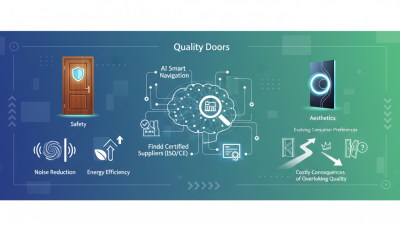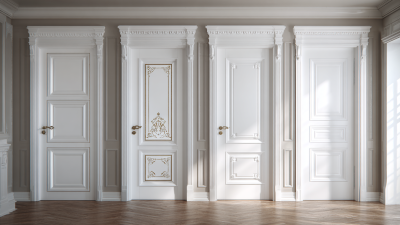
Global buyers rarely choose a door for appearance alone. A premium door must balance design, security, weather resistance, and long-term value. This guide examines ten leading options for homes, hotels, offices, and high-end developments across different regions. Each selection reflects practical criteria, not marketing language alone.
Materials matter. Solid timber may offer warmth and character, while engineered wood can improve dimensional stability. Aluminum and steel provide strength, especially around busy entrances. Glass adds daylight, but it requires careful attention to insulation, privacy, and impact resistance. A door facing strong sunlight in Dubai may need different specifications from one exposed to coastal rain in Norway. Certification, hardware quality, installation methods, and warranty support also deserve close inspection. They often determine real performance.
Experience from architects, installers, and property owners can reveal details that product brochures miss. Hinges may loosen. Finishes may age unevenly. Delivery schedules may change. These issues are not always dramatic, but they affect ownership. No ranking is perfect. Regional building codes, climate conditions, budgets, and personal taste can change the final choice. Buyers should verify technical documents and consult qualified local professionals before ordering. A carefully selected door should feel solid, close smoothly, resist daily wear, and remain attractive years later. That is the real standard. Not simply a polished photograph.
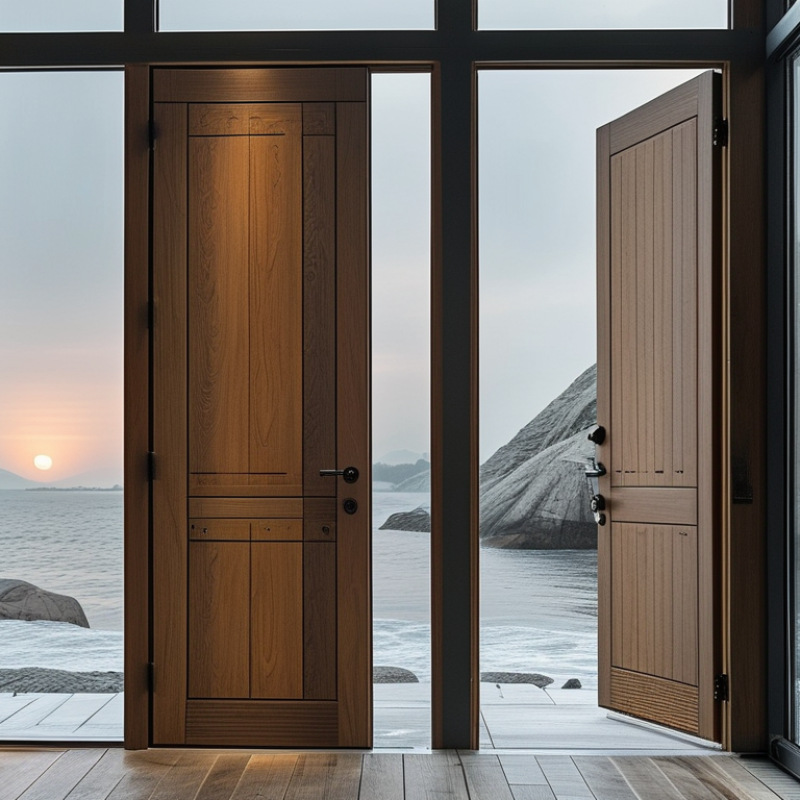
For global buyers, a premium door is more than a heavy slab and attractive finish. It should perform reliably across climates, building codes, and installation methods. UNEP’s 2023 Global Status Report states that buildings consume about 34% of global energy and produce nearly 37% of energy-related carbon emissions. Therefore, thermal performance matters. Buyers should request tested U-values, weather seals, and verified air-leakage results, not vague claims such as “energy saving.”
Durability also defines quality. A premium door should resist moisture, corrosion, ultraviolet exposure, and repeated opening cycles. Standards such as ASTM E283 and EN 14351-1 help evaluate air permeability and overall performance. Acoustic ratings are important near airports, offices, and dense housing. Security hardware must be tested, replaceable, and compatible with local requirements. Small details matter. A precise frame. A stable threshold. Clear maintenance instructions.
Material transparency is becoming equally important. The World Green Building Council’s reports emphasize healthier materials, lower embodied carbon, and longer building life cycles. Global buyers should examine recycled content, responsible timber documentation, repair options, and end-of-life plans. Digital product records can improve traceability, although many suppliers still provide incomplete data. That weakness deserves attention. A beautiful door with poor installation guidance may underperform within months. Premium quality is therefore measurable, documented, and supported after delivery—not merely visible in a showroom.
| Rank | Premium Door Type | Defining Construction | Typical Thermal Performance | Security, Acoustic and Fire Potential | Best Global Applications | Key Buyer Checks |
|---|---|---|---|---|---|---|
| 1 | Thermally Broken Aluminium Lift-and-Slide Door | Insulated aluminium profiles, low-emissivity double or triple glazing, stainless-steel rollers and multi-point locking. | High-performance systems commonly target approximately 0.8–1.6 W/m²K for the complete door, depending on size, glazing and configuration. | Strong resistance to weather and forced entry when tested hardware is used; acoustic performance often reaches about 35–45 dB with suitable glazing. | Luxury residences, coastal properties, hotels and large openings connecting interiors with terraces. | Verify maximum panel weight, wind-load rating, drainage design, corrosion protection and local energy-code compliance. |
| 2 | Engineered Timber Entrance Door | Stable laminated timber core, insulated construction, durable exterior coating and weather-resistant seals. | Typically about 0.7–1.4 W/m²K for well-insulated assemblies; performance varies with thickness, glazing and frame design. | Excellent natural insulation and good acoustic potential; security depends on the core, cylinder, hinges and locking system. | High-end villas, heritage-style homes, mountain properties and projects requiring a warm natural appearance. | Check moisture resistance, coating-maintenance intervals, dimensional stability and certified hardware options. |
| 3 | Insulated Fiberglass Entry Door | Glass-fiber-reinforced skins over a polyurethane or similar insulated core, combined with reinforced frames and weather seals. | Commonly delivers approximately 1.0–1.8 W/m²K, depending on glazing, frame and threshold details. | Good resistance to moisture, denting and ultraviolet exposure; acoustic and security levels depend on the complete tested assembly. | Humid, coastal or high-maintenance-sensitive climates; residential entrances exposed to strong weather variation. | Confirm surface-finish warranty, impact resistance, replacement-part availability and compatibility with regional door sizes. |
| 4 | Insulated Steel Security Door | Galvanized or corrosion-protected steel skins, reinforced frame, insulated core, security cylinder and multi-point locking. | Approximately 1.0–2.0 W/m²K is achievable with thermal breaks and insulated cores; unbroken steel frames perform less efficiently. | Very high security potential; tested products may also provide smoke-control or fire-resistance ratings, commonly 30–120 minutes depending on certification. | Urban residences, apartments, embassies, utility rooms and buildings requiring a robust security entrance. | Request burglary-resistance classification, fire-test documentation, salt-spray results and cylinder standards accepted in the destination market. |
| 5 | Architectural Pivot Door | Oversized leaf supported by concealed floor and head pivots, often using aluminium, timber, steel or composite construction. | About 1.0–2.0 W/m²K is possible for insulated designs; large leaves and perimeter seals strongly affect results. | Can provide strong security and acoustic insulation, but the pivot hardware and locking points must be specifically engineered for the door weight. | Statement entrances for villas, galleries, resorts and contemporary commercial buildings. | Check structural opening requirements, threshold accessibility, wind deflection, adjustment procedures and delivery limitations for oversized panels. |
| 6 | High-Security Composite Door | Multi-layer construction combining reinforced polymer or mineral cores, steel or aluminium reinforcement and insulated exterior skins. | Premium assemblies commonly fall within approximately 0.7–1.4 W/m²K, subject to glazing and threshold selection. | Designed to balance thermal efficiency, forced-entry resistance and weather sealing; acoustic ratings may reach roughly 37–45 dB when tested. | Cold climates, detached homes, apartment entrances and locations requiring low maintenance with a refined finish. | Confirm independent test reports, threshold water-tightness, replacement hardware and the available range of opening directions. |
| 7 | Triple-Glazed Passive-House Door | Highly insulated frame, triple glazing, thermally improved threshold, airtight seals and carefully controlled installation details. | Complete door U-values can approach or remain below approximately 0.8 W/m²K in optimized configurations. | Excellent air-tightness and indoor comfort; security and acoustic results depend on the selected lock, glazing and certified assembly. | Passive or low-energy buildings, cold regions and projects pursuing stringent energy-performance targets. | Check whole-door certification, installation tolerances, thermal-bridge details and whether the declared value uses the complete assembly. |
| 8 | Acoustic-Rated Apartment Door | Dense insulated leaf, compression seals, drop seal or acoustic threshold, reinforced frame and perimeter smoke seals where required. | Thermal values commonly range from approximately 1.0–2.0 W/m²K, depending on the door thickness and frame. | Acoustic ratings of approximately 37–45 dB are achievable in tested assemblies; many designs can also be fire-rated for 30–60 minutes. | Apartments, hotels, serviced residences and buildings near airports, roads or dense urban areas. | Distinguish laboratory rating from installed performance and verify smoke, fire, accessibility and egress requirements locally. |
| 9 | Fire-Rated Glazed Timber or Steel Door | Fire-resistant leaf and frame, tested glazing where included, intumescent seals, self-closing hardware and compatible ironmongery. | Thermal performance varies considerably; insulated versions may achieve approximately 1.2–2.5 W/m²K. | Common certified fire-resistance periods include 30, 60, 90 or 120 minutes; smoke-control and acoustic ratings require separate verification. | Hotels, offices, mixed-use buildings, stairwells, plant rooms and protected escape routes. | Use a complete tested door-set, not mixed components; confirm certification recognition, closer type, glazing limits and inspection requirements. |
| 10 | Thermally Insulated Folding Door | Multiple hinged panels with thermally improved frames, insulated glazing, top or bottom-running hardware and compression seals. | Typically around 1.0–1.8 W/m²K for premium systems; more joints can increase air leakage compared with fixed glazing or lift-and-slide doors. | Good daylight and ventilation flexibility; security, acoustic performance and weather resistance depend heavily on panel alignment and hardware. | Restaurants, hospitality venues, garden rooms, terraces and wide residential openings. | Check operating force, track drainage, panel stacking space, wind-load limits and long-term roller and seal maintenance. |
Note: Thermal values are indicative whole-door ranges expressed as U-values in W/m²K; lower values indicate better insulation. Acoustic and fire figures are achievable only when the complete door-set has been independently tested and correctly installed. Local building codes, climate conditions, accessibility rules and certification systems should be checked before purchase.