How to Choose the Best Intelligent Pole in 2026?
Choosing the best Intelligent Pole in 2026 starts with a clear purpose. A busy intersection may need traffic sensors, cameras, and reliable wireless coverage. A park may benefit more from efficient lighting, emergency call buttons, and environmental monitoring. The right design depends on the site, not the longest feature list. Small details matter. Check mounting space, cable access, power capacity, and how technicians can reach components safely. These factors affect installation and future maintenance.
Compare each pole’s hardware, software, and support as one system. Confirm that sensors and network equipment can work together, and ask how data is protected, stored, and updated. Review weather resistance, materials, warranty terms, energy use, and expected service life. Request clear documentation and a demonstration using realistic conditions, such as nighttime operation or weak network coverage. A polished brochure is not enough. It may leave practical questions unanswered.
Cost needs a wider lens than the purchase price. Include installation, connectivity, software fees, repairs, and upgrades in the comparison. Check local technical and safety requirements before choosing a supplier, since project conditions vary. Ask for references from similar deployments, then look for measurable results rather than broad promises. No single model fits every city. A careful shortlist should match specific needs, available infrastructure, and long-term operating capacity. Some trade-offs will remain; documenting them honestly is part of making a dependable choice.
What an Intelligent Pole Is and How It Works
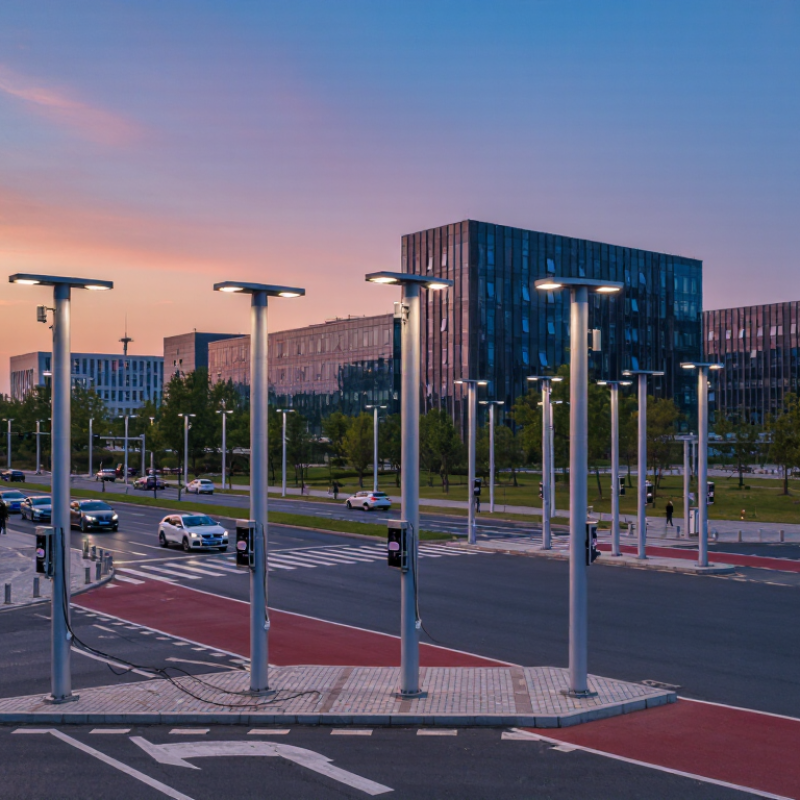
An intelligent pole combines a streetlight with digital equipment in one outdoor structure. It may include LED lighting, environmental sensors, cameras, wireless access points, and small computing units. The exact setup depends on local needs. Not every pole needs every feature.
At night, a light sensor or control schedule can trigger dimming or brighter output. A connected sensor might measure air conditions or traffic nearby. Data travels through a wired or wireless network to a management platform. Some poles can process basic information on site, which may reduce network delays. Operators can then adjust lighting or check equipment remotely. A failed lamp, for example, may send an alert instead of waiting for a routine inspection.
The pole also needs reliable power, weather-resistant enclosures, and room for maintenance access. These details matter as much as the visible technology. The concept is neat. Installation is not. Signal coverage can vary between two nearby streets, and added devices increase power and servicing needs. Before choosing a system, check what each component measures, where its data goes, and how it can be maintained over time. A clear wiring diagram helps. So does a realistic plan for upgrades.
Which Technologies and Services an Intelligent Pole Can Support
How to Choose the Best Intelligent Pole in 2026?
Which Technologies and Services an Intelligent Pole Can Support
An intelligent pole should fit the street, not just carry an impressive feature list. Near a busy crossing, adaptive LED lighting can brighten the pavement when people approach and dim during quiet hours. Cameras may support traffic observation, while environmental sensors can track temperature, noise, or air quality. Each device needs power, reliable connectivity, and a clear maintenance plan. Small details matter.
Connectivity choices affect what the pole can actually deliver. Wi-Fi access points can serve nearby public spaces, while cellular or fiber connections can carry data to management systems. Edge computing can process selected information locally, reducing delays and unnecessary network traffic. An emergency call unit may also be useful in a park or transit area. Keep it practical.
Before choosing, check whether the systems can work together through documented interfaces. Ask how software updates, outages, and replacement parts will be handled. Weatherproof enclosures and accessible service panels can save time when technicians work in rain or cold. Data collection also deserves careful review: sensors should gather only what the service needs, with clear access controls and retention settings. More technology is not always better. A pole with fewer, well-supported services may serve a neighborhood more reliably than one crowded with features. Even a careful plan can miss a local need, so review the design with maintenance staff and nearby users before installation.
How to Choose the Best Intelligent Pole in 2026?
Which technologies and services can an intelligent pole support? Compare typical operating power ranges to help plan capacity for lighting, connectivity, sensing, and public information services.
Ranges are indicative planning estimates, not product specifications. Actual consumption varies with equipment, configuration, brightness, network load, and operating conditions. Check equipment specifications and allow for peak demand when sizing power and backup systems.
How to Assess Site Needs and Local Conditions
Before choosing an intelligent pole, visit the site at different times of day. Morning shade and evening glare can change lighting and camera performance. Note tree canopies, building shadows, pedestrian routes, and vehicle access. Check local wind, heavy rain, snow, or coastal salt exposure. These conditions affect pole placement, enclosure protection, and maintenance needs. Small details matter.
Map the services the site actually needs, such as lighting, traffic sensors, or public Wi-Fi. Then check power availability, cable routes, wireless coverage, and nearby obstructions. A signal that works beside a building may weaken across an open plaza. Measure clearances and confirm crews can safely reach equipment for repairs. A common planning mistake is adding devices before confirming capacity and upkeep. I would resist that temptation. More features can mean more failure points, and site surveys are not always perfect. Record uncertainties, such as seasonal foliage or changing traffic, and revisit them before final selection.
How to Compare Performance, Compatibility, and Total Cost
How to Choose the Best Intelligent Pole in 2026?
How to Compare Performance, Compatibility, and Total Cost
An intelligent pole should perform reliably in the conditions where it will actually operate. Compare lighting output, energy use, operating temperature, and protection against dust and moisture. Ask for test results, not just headline specifications. Check how quickly maintenance teams can access components and replace a failed unit. Small details matter. Test it at night.
Compatibility can affect both installation time and future upgrades. Confirm that the pole supports the sensors, communications equipment, and control systems your project needs. Ask suppliers for interface specifications and a clear account of integration requirements. A short pilot can reveal weak connections, coverage gaps, or confusing software before a larger purchase. One site may not represent every location, though.
For total cost, look beyond the purchase price. Include foundations, cabling, installation, network charges, inspections, repairs, and expected energy use over the planned service life. Compare warranty terms and the availability of replacement parts. A spreadsheet can still miss the cost of a delayed repair or a difficult site visit. Use realistic maintenance assumptions, and note where estimates remain uncertain.
How to Verify Safety, Compliance, and Long-Term Support
Before choosing an intelligent pole, ask for evidence tied to the exact model and configuration being offered. A certificate for one enclosure may not cover its cameras, radio equipment, or power system. Check independent test reports, component ratings, and installation instructions. Confirm that electrical, structural, radio, and privacy requirements match the intended location. Requirements vary by region. That matters.
Review how the pole handles real conditions, not just a showroom demonstration. Look for documented checks on water and dust protection, temperature, corrosion, wind loading, and electrical safety. Ask who performs commissioning and what measurements they record. A tidy document pack is reassuring, but it is not proof by itself. I would compare the report numbers with the product labels and request clarification when they do not match.
Long-term support deserves the same scrutiny as hardware. Get written terms for warranty coverage, spare-part availability, repair times, software updates, and security-patch delivery. Ask how faults are logged and whether updates can be applied without disabling essential services. Check that replacement parts will remain compatible as modules change. A low purchase price can look attractive; still, unclear support costs may surface later. Before signing, speak with a technical contact who can explain the maintenance plan in plain language.
