2026 How to Choose Quality Exterior Doors for Your Home?
Choosing quality exterior doors can significantly impact your home’s appeal and security. According to Lisa Johnson, a renowned expert in home design, "The right door sets the tone for your entire house." With many options available, it's essential to focus on materials, style, and functionality.
Exterior doors serve as the first line of defense against weather and intruders. High-quality options can provide insulation and energy efficiency. Consider how a door’s color and design complement your home’s architecture. Sometimes, homeowners overlook these details, leading to mismatched aesthetics.
Investing in quality exterior doors is not merely about appearance; it's about durability and protection. Many options may seem attractive but lack the quality needed for long-term use. Reflecting on choices can lead to a more satisfying investment in your home’s future.
Factors to Consider When Selecting Exterior Doors for Your Home
Choosing the right exterior doors is crucial for any homeowner. Several factors influence this decision. One main aspect is material. Doors come in wood, fiberglass, and steel. Each has its pros and cons. Wood provides warmth but requires maintenance. Steel is durable and energy-efficient, but it can dent. Fiberglass resists moisture and doesn’t warp. Balance aesthetics with functionality.
Security is another key factor. A door needs to be sturdy. Consider features like a solid core or additional locks. A door without proper security can be an easy target. Also, think about energy efficiency. Quality doors have insulation and weather stripping to keep your home comfortable. Improperly sealed doors lead to higher energy bills.
Don’t overlook style and color. An exterior door adds curb appeal. It should match your home’s architecture. However, trendy colors can go out of style quickly. Choosing a timeless design may be wise. Remember to reflect on personal needs and local climate. Your region might influence door material and style. Quality doors are a long-term investment. Ensure you choose wisely.
Types of Exterior Doors: Pros and Cons of Each Option
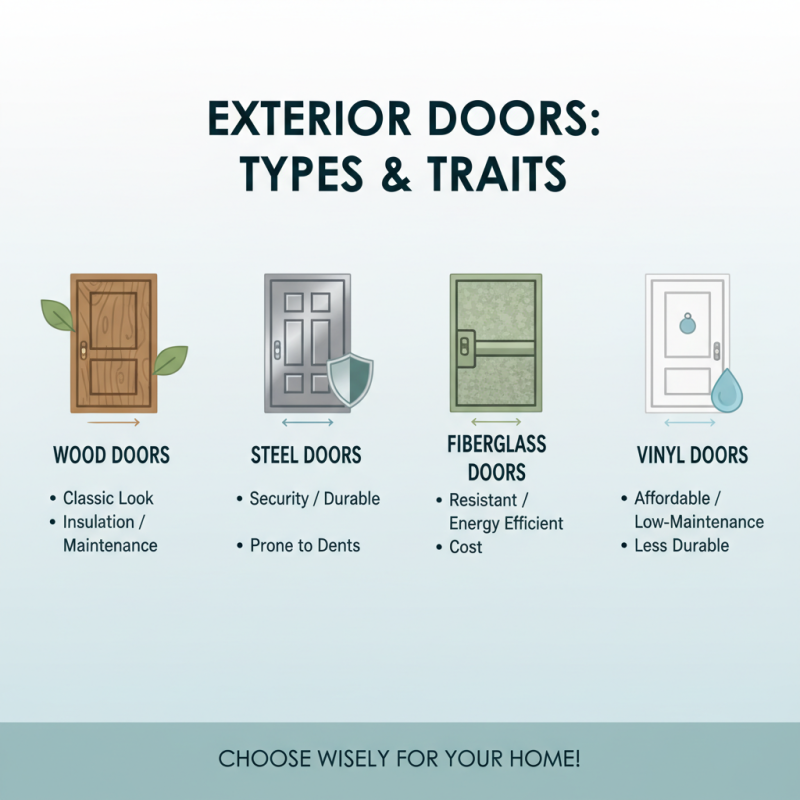
When selecting exterior doors for your home, understanding different types is crucial. There are several options available: fiberglass, steel, wood, and vinyl. Each has its pros and cons.
Fiberglass doors are popular due to their excellent insulation properties. They resist dents and scratches, making them low maintenance. A report by the National Association of Realtors states that fiberglass doors can provide up to a 70% return on investment. However, they can be more expensive upfront.
Steel doors offer robust security and durability. They are typically the least expensive option. However, they may be prone to rust and dents over time. Homeowners should weigh these factors before purchasing. Steel doors can also offer energy efficiency.
Wood doors bring a warm and classic aesthetic. They can be customized easily but require more upkeep. A survey showed that homeowners prefer wood for its beauty. Yet, they may not withstand harsh weather as well.
**Tip:** Always consider your local climate when choosing a door type. This can significantly affect its longevity.
**Tip:** Seek professional advice on insulation ratings. This can help in making an informed choice.
Ultimately, balancing cost, aesthetics, and functionality is key. Each door type has its unique attributes. Reflect on how each option aligns with your home’s needs.
Materials for Exterior Doors: Best Choices for Durability and Style
When selecting exterior doors, materials play a crucial role in both durability and style.
Wood, fiberglass, and steel are the top choices, each with unique properties.
According to the National Association of Home Builders, fiberglass doors can withstand extreme weather better than wood, with a lifespan of up to 30 years.
Steel doors provide high security and energy efficiency. However, they may dent and rust over time if not properly maintained.
Tip: Consider climate when choosing material. For humid areas, fiberglass is ideal.
In areas prone to break-ins, steel provides better protection. While wood exudes classic beauty, it requires regular upkeep to prevent warping or rotting.
Aside from material, door design is essential for curb appeal.
A sleek, modern design can enhance your home's aesthetics. However, choosing overly intricate designs may complicate maintenance.
Simplicity often leads to easier upkeep without losing style. The key is to balance appearance and functionality.
Tip: Test door samples in-store to ensure comfort and ease of use.
Remember, a door that looks good but is hard to operate can be a frustrating choice over time.
Prioritize both form and function when making your selection.
Energy Efficiency Ratings: Understanding the Impact on Home Comfort
When choosing exterior doors for your home, energy efficiency is vital. A door's energy efficiency rating indicates how well it keeps conditioned air inside. Poor insulation can lead to discomfort and high energy bills. Seek doors with good insulation properties. Look for those with solid cores and weather stripping.
Understanding energy efficiency ratings can be confusing. Look for the ENERGY STAR label in your search. However, not every labeled door will suit your needs. The climate in your area matters significantly. If you live in a colder region, a badly insulated door can be a real headache. Drafts and temperature fluctuations can affect your home comfort severely.
Take time to compare different options. Ask yourself about your priorities. Some doors appear perfect but may not perform well in real conditions. Research reviews and talk to homeowners. Sometimes, beautiful designs don’t always translate to energy savings. You might find that the door you love the most isn’t the best for your energy bills. Be sure to evaluate both aesthetics and functionality.
Selecting the Right Hardware and Accessories for Exterior Doors
Choosing the right hardware and accessories for your exterior doors can truly enhance your home’s curb appeal. Different finishes can dramatically change the look. Consider brushed nickel or matte black for a modern feel. Traditional homes may benefit from oil-rubbed bronze. Don't forget to match hardware styles with your door design.
Locking mechanisms are crucial. Keyless entries offer convenience but think about battery life. A simple deadbolt might seem less complicated but can add substantial security. Handles and knobs should also reflect your style. A unique knob can be a conversation starter. Look for ergonomic designs that provide comfort.
Lastly, think about additional accessories. Door knockers, house numbers, and even decorative wreaths can personalize your entrance. Accessories should complement, not clash. Sometimes, fewer accessories are better. It’s easy to over-decorate. Let your door hardware shine through its simplicity.
2026 How to Choose Quality Exterior Doors for Your Home?
| Door Material |
Insulation Type |
Security Features |
Weather Resistance |
Style Options |
Price Range |
| Fiberglass |
Polyurethane |
Multi-point lock system |
Excellent |
Contemporary, Traditional |
$1,000 - $2,500 |
| Steel |
Polystyrene |
Deadbolt lock |
Good |
Industrial, Modern |
$800 - $1,800 |
| Wood |
Solid wood core |
Reinforced hinges |
Fair |
Rustic, Classic |
$1,200 - $3,000 |
| Vinyl |
Foam core |
Single-point lock |
Moderate |
Modern, Minimalist |
$600 - $1,200 |